

- Your cart is empty
- Continue shopping


Rhodiola rosea in menopause: effects on fatigue and stress
-
admin
- Posted on
- Categories:Women's Health
Menopause is a natural stage in a woman’s life, marked by a progressive decline in oestrogen production. This transition can cause symptoms that vary greatly from one woman to another, including hot flushes, night sweats, sleep disturbances, fatigue, increased irritability, anxiety, difficulty concentrating, mood changes and lower energy levels.
Faced with these symptoms, many women look for natural or complementary alternatives. One plant that has attracted growing interest is Rhodiola rosea, also known as rhodiola or golden root.
But does Rhodiola rosea really have an effect on menopause?
In this article, we explain what this plant is, its potential benefits during menopause and the precautions that should be taken before using it.
What is Rhodiola rosea?
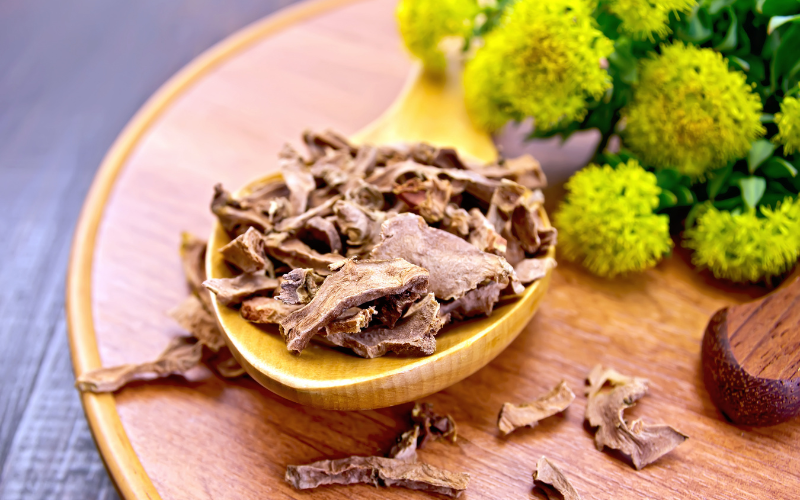
Rhodiola rosea L. is a plant traditionally used in several regions of Europe and Asia, particularly to support resistance to stress and relieve physical and mental fatigue and feelings of weakness. The root and rhizome are generally used to prepare dry extracts for oral administration.
The plant contains several bioactive compounds, including rosavins, salidroside, tyrosol, flavonoids and other phenolic compounds. These constituents have been studied for their potential adaptogenic, antioxidant and anti-inflammatory properties, as well as their possible role in regulating the body’s response to stress.
Is Rhodiola rosea an adaptogen?
Rhodiola rosea is often classified as an adaptogenic plant. In simple terms, this means that it may help the body cope more effectively with periods of increased physical or emotional strain and restore balance in stressful situations.
Its use is mainly associated with reducing fatigue, improving concentration and supporting emotional well-being. For this reason, it has attracted interest during menopause and perimenopause, when some women experience increased fatigue, irritability, anxiety or difficulty maintaining focus.
However, Rhodiola rosea is not a form of hormone replacement therapy for menopause and does not act directly on oestrogen levels. Its potential benefits may be related to certain symptoms associated with stress and fatigue, and it should not replace treatments recommended by your doctor or pharmacist.
Rhodiola rosea and menopause: what is the connection?
During menopause, declining oestrogen levels can affect several areas of the body, including:
sleep;
mood;
body temperature regulation;
cardiovascular function;
bone health.
For this reason, Rhodiola rosea has attracted interest due to its possible role in relieving some symptoms through its adaptogenic effect, as mentioned above.
How does Rhodiola rosea work?
Rhodiola rosea may act on different processes related to the body’s stress response, energy production and emotional balance. It is also thought to have antioxidant and anti-inflammatory properties, which may help protect cells from the effects of oxidative stress.
A possible interaction with mechanisms associated with oestrogen activity has also been suggested. However, this possibility does not mean that Rhodiola rosea can be considered an alternative to hormone therapy or that it has an effect similar to that of medicines used during menopause.
Does Rhodiola rosea help with hot flushes?
Rhodiola rosea should not be presented as a specific solution for hot flushes or night sweats.
These symptoms, known as vasomotor symptoms, are among the most common manifestations of menopause.
The potential usefulness of Rhodiola rosea during this stage is mainly associated with supporting the body during periods of increased stress, physical and mental fatigue, irritability or reduced emotional well-being. This means that it may help with certain symptoms associated with menopause, but it does not act directly on the underlying cause of hot flushes.
Can Rhodiola rosea be combined with black cohosh?
Rhodiola rosea may be included in supplements alongside Actaea racemosa, also known as black cohosh. While rhodiola is mainly used to support the body’s response to stress and reduce feelings of fatigue, black cohosh is traditionally associated with relieving vasomotor symptoms, which are among the most common symptoms of menopause.
However, the presence of both plants in the same supplement does not mean that the combination is suitable for every woman. The product’s composition and dosage, the medicines being taken and the woman’s health status should all be considered before starting supplementation.
Which menopause symptoms may benefit most from Rhodiola rosea?
Rhodiola rosea should not be regarded as hormone replacement therapy for menopause. However, it may be discussed as a complementary option in specific situations, particularly when a woman experiences fatigue, stress, irritability or lower energy levels.
Fatigue and lower energy levels
Fatigue is a common complaint during perimenopause and menopause. It may be associated with interrupted sleep, stress, thyroid disorders, anxiety or excessive family or professional responsibilities.
Rhodiola rosea has been studied in the context of fatigue and stress, but it is important to identify the cause of tiredness first.
Stress and irritability
Some women experience increased emotional sensitivity during this stage. Rhodiola rosea may be of interest due to its traditional use in the temporary relief of stress symptoms.
However, it does not replace medical or psychological support when there is severe anxiety, persistent depressive symptoms or a significant impact on daily life.
Concentration and mental clarity
Difficulty concentrating, often described as “brain fog”, may occur during menopause and can manifest as forgetfulness, reduced clarity of thought or difficulty maintaining focus.
During menopause, Rhodiola rosea may be of interest in supporting mental performance and reducing feelings of cognitive fatigue. However, it should not be presented as a specific or proven solution for menopause-related brain fog.
Is Rhodiola rosea safe?
Rhodiola rosea is generally well tolerated, but the fact that it is a plant does not mean that it is suitable or safe for everyone.
Its use is intended for adults and should not be continued for prolonged periods without professional guidance. If symptoms persist, worsen or new symptoms develop, it is advisable to consult a doctor or pharmacist.
Possible adverse effects include headaches, nausea, abdominal discomfort, diarrhoea, skin rashes and itching. Use should be discontinued if an unexpected or persistent reaction occurs.
Who should take particular care?
Particular caution is required in women who:
take long-term medication;
are undergoing hormone therapy;
take antidepressants, anxiolytics, anticoagulants or antihypertensive medicines;
have a history of cancer.
In these situations, personalised professional advice is essential.
How should you choose a Rhodiola rosea supplement?
Before starting any supplement, it is important to assess its composition, the intended purpose and the woman’s clinical circumstances.
Product composition
Not all supplements containing Rhodiola rosea have the same composition. The concentration of the extract, the part of the plant used, the extraction method and the standardisation of active compounds may vary.
The purpose of supplementation
Rhodiola rosea may be more appropriate when the aim is to support resistance to stress and relieve temporary fatigue.
It should not be chosen with the expectation that it will treat hot flushes, night sweats or vaginal dryness.
The woman’s clinical circumstances
Menopause is not the same for every woman. A woman experiencing severe hot flushes, frequent insomnia, significant mood changes or genitourinary symptoms should be referred for an appropriate assessment.
Hormonal and non-hormonal options with different levels of supporting evidence are available. These should be selected according to the woman’s medical history, preferences and contraindications.
The role of Farmácia Dias Machado in providing advice
At Farmácia Dias Machado, pharmaceutical advice can help distinguish between mild menopause symptoms and situations that require medical assessment.
Our team can also review your usual medication, identify possible risks, help you choose supplements more carefully and prevent unnecessary combinations.
Menopause should be managed from a comprehensive perspective. In addition to supplements, it is important to maintain a balanced diet, engage in regular physical activity, adopt good sleep habits and manage stress, among other measures. You can rely on our team for the support you need.
Conclusion
In conclusion, Rhodiola rosea is a plant known for its potential adaptogenic properties and its use during periods of increased stress, physical and mental fatigue or reduced energy levels.
During menopause, it may help support symptoms such as fatigue, irritability, difficulty concentrating and reduced emotional well-being. However, it should not be presented as a specific treatment for menopause, particularly for hot flushes and night sweats.
The response to supplementation may vary from one woman to another, which means that the decision should be made on an individual basis.
Before starting a supplement containing Rhodiola rosea, ask our team for advice, particularly if you take medication, have a chronic health condition or experience persistent symptoms.
No. Rhodiola rosea does not treat menopause or reverse the hormonal changes associated with this stage. It can only be considered a complementary aid for fatigue or stress.
To date, there is no clinical evidence demonstrating that Rhodiola rosea alone reduces hot flashes or night sweats. Current recommendations do not include Rhodiola rosea as a recommended therapy for vasomotor symptoms.
Rhodiola rosea may be beneficial for managing stress and fatigue during menopause, given its traditional use in these contexts. However, persistent fatigue should be evaluated by a healthcare professional, as it could be linked to sleep disturbances, thyroid issues, stress, or other medical conditions.
Rhodiola rosea may be beneficial in managing symptoms associated with stress, mild anxiety, and mental fatigue. However, it should not be considered a treatment for anxiety or depression during menopause. If these symptoms are persistent, severe, or interfere with daily life, it is important to seek an evaluation from a healthcare professional.
If symptoms persist for more than two weeks during use, a doctor or qualified healthcare professional should be consulted. The duration of use should follow the product instructions and professional advice.
Headache, nausea, abdominal pain, diarrhea, skin rash, and itching may occur. Although generally well-tolerated, it should be used with caution, especially by individuals taking chronic medication or with pre-existing medical conditions.
Bibliographic References
American College of Obstetricians and Gynecologists. (2014). ACOG Practice Bulletin No. 141: Management of menopausal symptoms. Obstetrics & Gynecology, 123(1), 202–216. https://doi.org/10.1097/01.AOG.0000441353.20693.78
European Medicines Agency, Committee on Herbal Medicinal Products. (2023). European Union herbal monograph on Rhodiola rosea L., rhizoma et radix (EMA/HMPC/24177/2023). https://www.ema.europa.eu/en/documents/herbal-monograph/final-european-union-herbal-monograph-rhodiola-rosea-l-rhizoma-et-radix-revision-1_en.pdf
Franco, O. H., Chowdhury, R., Troup, J., Voortman, T., Kunutsor, S., Kavousi, M., Oliver-Williams, C., & Muka, T. (2016). Use of plant-based therapies and menopausal symptoms: A systematic review and meta-analysis. JAMA, 315(23), 2554–2563. https://doi.org/10.1001/jama.2016.8012
Gerbarg, P. L., & Brown, R. P. (2016). Pause menopause with Rhodiola rosea, a natural selective estrogen receptor modulator. Phytomedicine, 23(7), 763–769. https://doi.org/10.1016/j.phymed.2015.11.013
The North American Menopause Society. (2023). The 2023 nonhormone therapy position statement of The North American Menopause Society. Menopause, 30(6), 573–590. https://doi.org/10.1097/GME.0000000000002200
Panossian, A., Wikman, G., & Sarris, J. (2010). Rosenroot (Rhodiola rosea): Traditional use, chemical composition, pharmacology and clinical efficacy. Phytomedicine, 17(7), 481–493. https://doi.org/10.1016/j.phymed.2010.02.002
Pkhaladze, L., Davidova, N., Khomasuridze, A., Shengelia, R., & Panossian, A. G. (2020). Actaea racemosa L. is more effective in combination with Rhodiola rosea L. for relief of menopausal symptoms: A randomized, double-blind, placebo-controlled study. Pharmaceuticals, 13(5), 102. https://doi.org/10.3390/ph13050102
Stojcheva, E. I., & Quintela, J. C. (2022). The effectiveness of Rhodiola rosea L. preparations in alleviating various aspects of life-stress symptoms and stress-induced conditions: Encouraging clinical evidence. Molecules, 27(12), 3902. https://doi.org/10.3390/molecules27123902
Tags:
