






- Your cart is empty
- Continue shopping


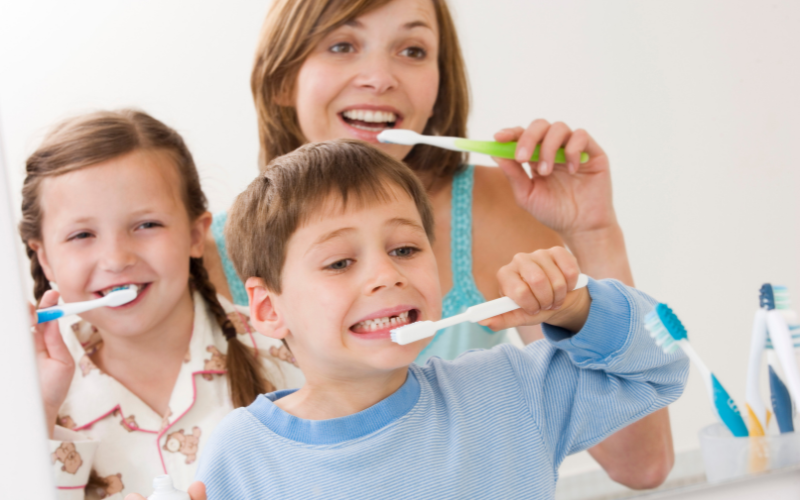
Between the ages of 6 and 12, a child’s mouth undergoes an important transformation. Baby teeth begin to fall out, the first permanent teeth emerge, and new areas that are difficult to reach during brushing appear. For this reason, good oral hygiene during the school years is crucial for the future health of the teeth and mouth.
At the same time, children become more independent and start wanting to brush their teeth without help. However, knowing how to hold a toothbrush does not necessarily mean that they can effectively remove plaque from every surface.
Remember: a good oral hygiene routine during the school years should combine independence, supervision, and consistent habits.
In simple terms, the essential measures are:
Brush the teeth twice a day for approximately two minutes;
Use an age-appropriate fluoride toothpaste;
Spit out excess toothpaste without rinsing immediately;
Clean between the teeth;
Limit how often sugary foods and drinks are consumed;
Attend regular oral health appointments.
These measures help prevent tooth decay, gum inflammation, dental pain, and other problems that can affect a child’s eating, sleep, concentration, and well-being.
In this article, we explain how to create an effective oral hygiene routine during the school years and which aspects parents should pay particular attention to.
Why is it so important to care for teeth between the ages of 6 and 12?
The school years usually coincide with the mixed dentition stage. This means that baby teeth and permanent teeth are present in the mouth at the same time.
This transition creates gaps, uneven areas, and spaces where plaque can accumulate more easily.
At around the age of 6, the first permanent molars also begin to emerge. These teeth appear behind the last baby molars and do not replace any existing tooth. For this reason, they can easily go unnoticed.
The first permanent molars have grooves on their chewing surfaces. When these grooves are deep, they are more difficult to clean and may retain plaque and food particles.
At this stage, children also tend to eat more snacks outside the home and have greater contact with sugary foods and drinks. The combination of these factors makes maintaining a structured routine especially important.
How should oral hygiene be carried out during the school years?
An effective routine does not depend on using many products. It depends mainly on good technique, the correct use of fluoride, and repeating these measures every day.
Brush the teeth twice a day
Children should brush their teeth for approximately two minutes, at least:
Once in the morning;
Once at night, before going to bed.
Night-time brushing is particularly important. During sleep, saliva production decreases. As saliva helps neutralise acids and protect the teeth, leaving plaque and food particles in the mouth overnight increases the risk of tooth decay.
Oral health recommendations for school-age children advise brushing twice a day for approximately two minutes, with one of those brushing sessions taking place before bedtime.
Use a fluoride toothpaste
Fluoride strengthens tooth enamel and makes the teeth more resistant to the acids produced by plaque bacteria.
It also supports remineralisation. This process helps restore minerals to areas of enamel that are beginning to weaken.
School-age children should use a pea-sized amount of toothpaste. The fluoride concentration should be checked on the packaging and should be appropriate for the child’s age and individual risk of tooth decay.
Several guidelines recommend toothpastes containing approximately 1,350 to 1,500 ppm of fluoride for older children. However, the choice should take into account the recommendations of a dentist or dental hygienist.
Toothpastes containing very high concentrations of fluoride should not be used without professional advice. They are intended for specific situations involving a higher risk of tooth decay and require professional guidance.
Spit out excess toothpaste without rinsing
After brushing, the child should spit out the excess toothpaste but should not immediately rinse the mouth with water.
Rinsing removes much of the fluoride that remains on the teeth. By spitting out the excess toothpaste without rinsing, fluoride stays in contact with the enamel for longer, strengthening its protective effect.
After brushing at night, the child should also avoid eating or drinking, particularly sugary foods or drinks.
Choose a suitable toothbrush
The toothbrush should have:
A head that is appropriate for the size of the child’s mouth;
Soft bristles;
A handle that is comfortable for the child to hold.
A toothbrush head that is too large makes it difficult to reach the back teeth. Bristles that are too hard or excessive pressure may cause discomfort and irritate the gums.
The toothbrush should be replaced approximately every three to four months. It should be replaced sooner if the bristles become worn or misshapen.
Both manual and electric toothbrushes can be effective. The best option is the one that allows the child to reach every surface and maintain a consistent routine.
An electric toothbrush does not replace supervision, correct technique, or the time required for effective brushing.
Always follow the same sequence
Following a fixed sequence reduces the likelihood of forgetting certain areas.
The child can follow this order:
Brush the outer surfaces;
Brush the inner surfaces;
Brush the chewing surfaces;
Carefully clean the area along the gum line;
Check that the back teeth have been reached.
Movements should be small and gentle. There is no need to apply excessive force. Brushing with more pressure does not mean cleaning more effectively.
Until what age should parents help with brushing?
Independence should be encouraged, but it should develop gradually.
Many children still need direct help until at least the age of 7 or 8. Even after this age, it may be necessary to check their technique regularly, particularly when they are brushing the back teeth.
The length of time supervision is needed depends on the child’s coordination, maturity, and ability to complete every step. European recommendations emphasise that support should be adapted to the child’s individual ability rather than being based solely on age.
Between the ages of 6 and 8
An adult should participate directly or finish brushing after the child has tried to brush independently.
It is important to check:
The first permanent molars;
The inner surfaces of the teeth;
The area along the gum line;
Teeth that are still emerging.
Between the ages of 9 and 10
The child can take on more responsibility, but an adult should continue to observe their technique regularly.
The adult should also confirm that brushing:
Lasts approximately two minutes;
Takes place twice a day;
Includes the back teeth;
Is not carried out with excessive pressure.
Between the ages of 11 and 12
Supervision can become less direct, but parents should continue to monitor the regularity and quality of the child’s oral hygiene.
Children with braces, motor difficulties, developmental conditions, or a high risk of tooth decay may require support for longer.
When should dental floss be introduced?
A toothbrush cannot completely clean the spaces between teeth that are touching.
Interdental cleaning should begin when there are contact points between the teeth that toothbrush bristles cannot reach.
The following may be used:
Traditional dental floss;
Dental floss holders;
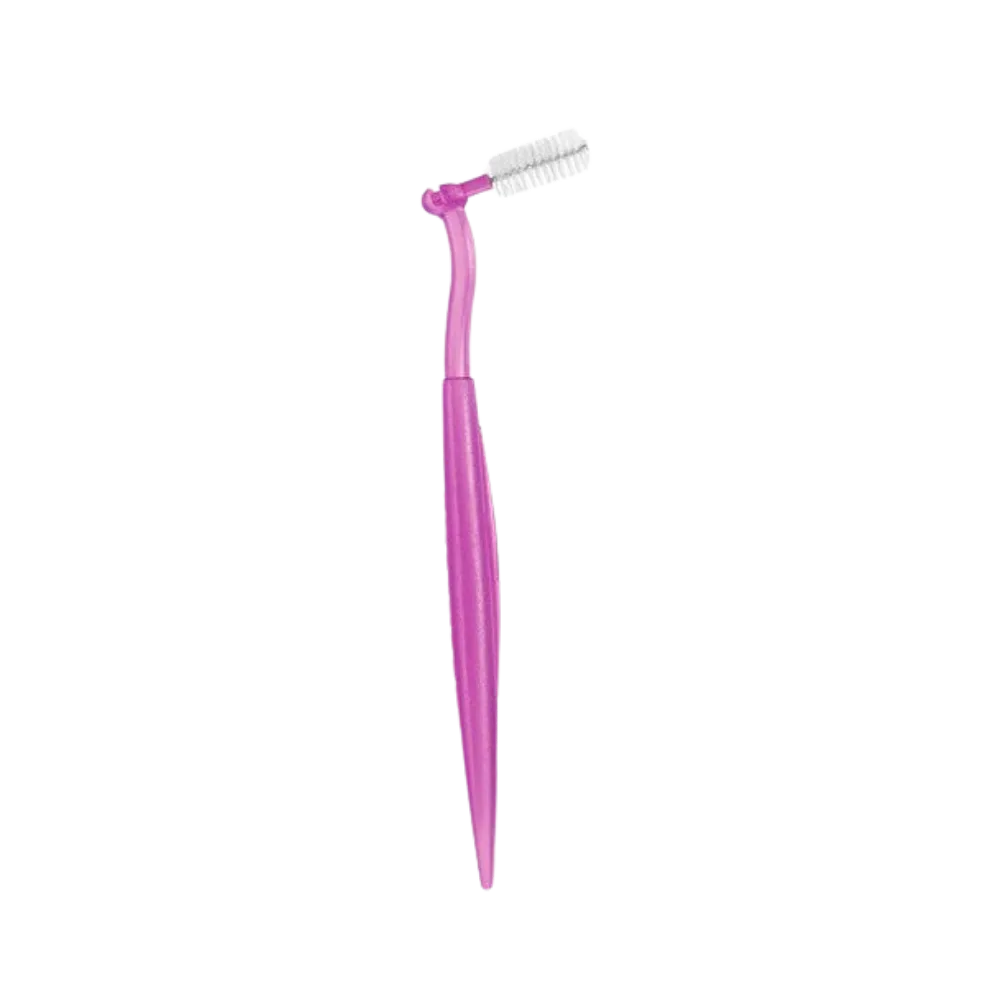
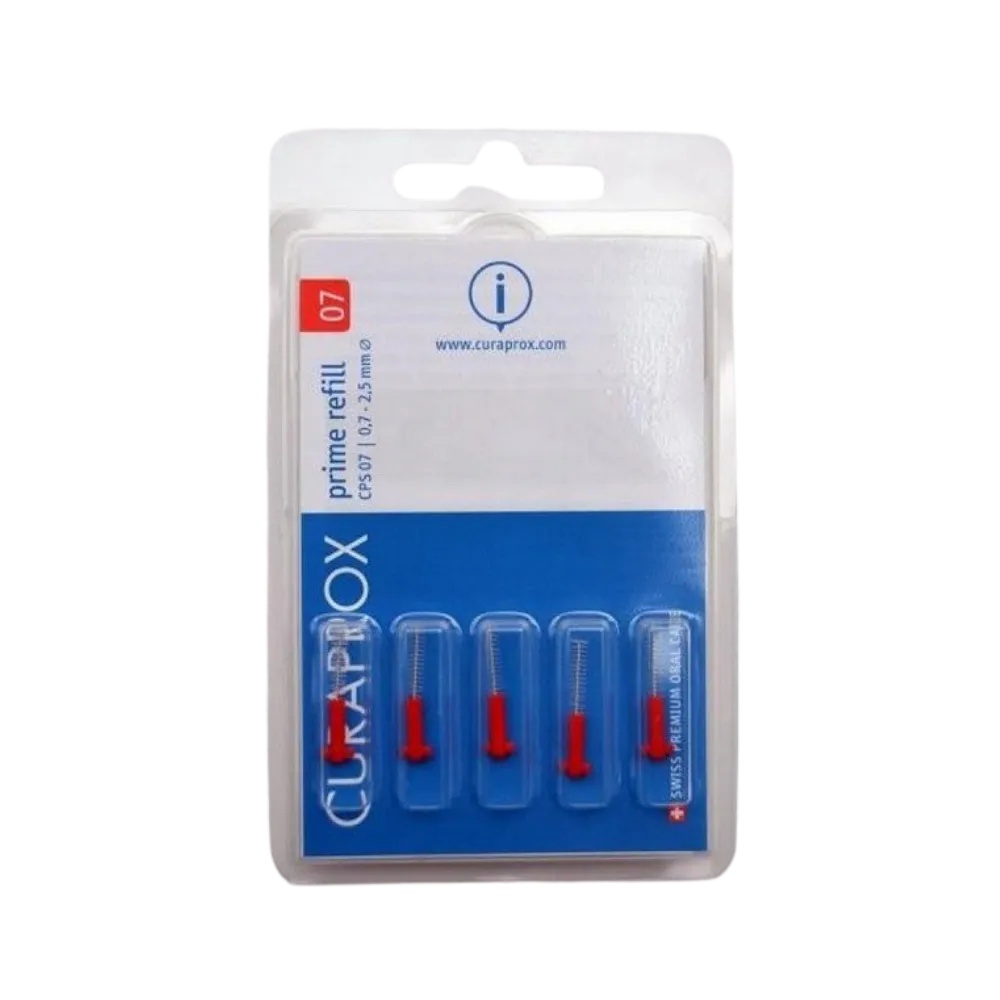
Interdental brushes;
Other accessories recommended by an oral health professional.
For younger children, this cleaning should be carried out by an adult. As their coordination improves, the child can begin to take part.
Interdental brushes are not suitable for every space. The size and type of accessory should be selected with professional guidance, particularly when the child wears braces.
Does diet affect dental health?
Tooth decay has several causes. However, how often the teeth come into contact with sugar plays an important role.
Plaque bacteria use sugars from foods and drinks and produce acids. These acids contribute to the loss of minerals from tooth enamel.
The total amount of sugar consumed is not the only factor that matters. Eating small portions frequently throughout the day can expose the teeth to repeated acid attacks.
For this reason, it is preferable to prevent the child from snacking continuously.
More tooth-friendly snacks
School snacks can include options such as:
Whole fresh fruit;
Bread with cheese;
Plain yoghurt with no added sugar;
Plain milk;
Raw vegetables that are appropriate for the child’s age;
Nuts with no added sugar or salt;
Water as the main drink.
Biscuits, snack bars, sweetened cereals, soft drinks, fruit juices, and flavoured drinks may contain considerable amounts of sugar.
These foods do not need to be presented as “forbidden”. The most important step is to limit how frequently they are consumed and prevent them from being eaten continuously between meals.
Do children need to use mouthwash?
Mouthwash, also known as an oral rinse, does not replace brushing or interdental cleaning.
For most children, it is not an essential product.
Some fluoride mouthwashes may be considered when the child is able to rinse and spit without swallowing. Even so, they should only be used for a specific reason and preferably following professional advice.
They may be recommended, for example, in situations involving:
An increased risk of tooth decay;
The use of braces;
Additional difficulty maintaining good oral hygiene;
Specific needs identified by a professional.
When a fluoride mouthwash is recommended, it should be used at a different time from toothbrushing. Using it immediately after brushing may wash away the more concentrated fluoride left by the toothpaste.
Antimicrobial mouthwashes should be reserved for specific situations and used only for the recommended period.
What is the role of oral health appointments?
Even when a child follows a good routine at home, they should be regularly monitored by a dentist or dental hygienist.
Appointments make it possible to:
Assess the child’s individual risk of tooth decay;
Identify changes at an early stage;
Monitor the eruption of permanent teeth;
Assess dental alignment and the bite;
Detect gum inflammation or bleeding;
Correct brushing technique;
Assess the need for fissure sealants;
Determine whether professional fluoride applications are needed.
The frequency of appointments should be adapted to the child’s individual needs. Children with a higher risk of tooth decay, braces, or difficulty maintaining oral hygiene may require more frequent appointments.
What is fluoride varnish?
Fluoride varnish is applied directly to the teeth by an oral health professional.
It may be recommended for children who have a higher risk of developing tooth decay. The frequency of application depends on the individual assessment.
Fluoride varnish does not replace brushing, a balanced diet, or regular appointments. It is a complementary measure included within a preventive oral health plan.
What are fissure sealants?
Fissure sealants are materials applied to the grooves of the molars, particularly the first permanent molars.
They create a smoother surface that is easier to clean, reducing plaque accumulation in deeper grooves and fissures.
Not every child needs fissure sealants. The decision depends on the shape of the teeth, the child’s ability to maintain good oral hygiene, and their individual risk of tooth decay.
How can families and schools promote good oral hygiene habits during the school years?
Oral hygiene habits become easier to maintain when they are part of a predictable routine.
At home, parents can:
Brush their teeth at the same time as the child;
Use a two-minute timer;
Create a weekly chart;
Praise the child’s effort and consistency;
Allow the child to choose between two suitable toothbrushes;
Keep oral hygiene products organised and accessible;
Avoid turning toothbrushing into a punishment.
The example set by adults is also important. When children see their parents taking care of their own teeth, they understand that oral hygiene is a normal part of everyday life.
Schools can reinforce these habits through health literacy activities, practical demonstrations, and consistent messages about diet and oral hygiene.
Common oral hygiene mistakes during the school years
Always allowing the child to brush without supervision
The child may only clean the front teeth, forget the molars, or finish brushing after just a few seconds.
Covering the entire toothbrush head with toothpaste
Using a larger amount does not necessarily provide greater protection. A pea-sized amount is sufficient for this age group.
Rinsing thoroughly after brushing
This habit removes the fluoride that should remain in contact with the teeth.
Brushing too hard
Excessive pressure may cause discomfort and irritate the gums.
Relying only on mouthwash
Mouthwash does not mechanically remove plaque and does not replace a toothbrush or dental floss.
Forgetting the first permanent molars
As these molars emerge behind the baby teeth, they may go unnoticed and may not be brushed properly.
When should you seek professional advice?
You should seek advice from a pharmacist or book an oral health appointment if the child has:
Toothache;
Persistent sensitivity;
White, brown, or dark marks on the teeth;
Frequent bad breath;
Red gums or repeated gum bleeding;
Difficulty chewing;
A broken tooth or dental trauma;
Braces and difficulty maintaining good oral hygiene;
Lesions or changes that do not improve.
Severe pain, facial swelling, fever, significant trauma, or difficulty breathing or swallowing require urgent assessment.
Daily oral hygiene checklist for school-age children
In the morning
Brush for two minutes;
Use a pea-sized amount of fluoride toothpaste;
Clean every surface;
Spit without rinsing.
During the day
Drink water;
Maintain set times for meals and snacks;
Avoid continuous snacking;
Limit sugary foods and drinks.
At night
Carry out interdental cleaning when necessary;
Brush for two minutes;
Ask an adult to check or finish the brushing;
Spit out excess toothpaste without rinsing;
Do not consume any more sugary foods or drinks.
In summary, good oral hygiene during the school years depends on simple measures that are repeated every day.
Brushing for two minutes twice a day, using fluoride toothpaste, spitting without rinsing, cleaning between the teeth, and limiting the frequency of sugar consumption are the main steps.
Independence should be encouraged but should not be rushed. Parents should continue to help with or check the child’s brushing until the child demonstrates an effective technique.
At Farmácia Dias Machado, you can find toothbrushes, toothpastes, and accessories suitable for different ages. The team can help you choose products that are appropriate for your child’s routine, without replacing regular assessment by a dentist or dental hygienist.
A child should brush their teeth at least twice a day for approximately 2 minutes. One of the brushing sessions should be done before going to bed.
Assistance and supervision should generally continue until the child is 10–12 years old. The transition to independence should be gradual and tailored to each child’s coordination and ability.
From the age of 3, a pea-sized amount should be used. Applying toothpaste along the entire length of the brush head is unnecessary.
The child should spit out excess toothpaste but avoid rinsing thoroughly with water. This practice allows some fluoride to remain in contact with the teeth.
Interdental cleaning should begin when teeth are touching each other and the toothbrush cannot adequately clean those spaces. Initially, it should be performed or supervised by an adult.
Both electric and manual toothbrushes can be effective when used correctly.
An electric toothbrush can make the routine easier for some children, especially those with coordination difficulties. However, it does not replace proper technique, the two-minute brushing time, or adult supervision.
The best toothbrush is one that allows the child to reach all tooth surfaces and that they use consistently.
Mouthwash is not necessary for most children’s routines and never replaces brushing or interdental cleaning.
Some products can be used from the age of 6, provided the child is able to swish the liquid around their mouth and spit it out without swallowing. The choice should be guided by a dentist, dental hygienist, or other qualified healthcare professional.
Frequent gum bleeding should not be considered normal, nor should it be ignored. It may be associated with plaque buildup and gum inflammation.
You should not stop brushing. Brushing should be done gently, using a soft-bristled toothbrush. If the bleeding persists, it is advisable to review your technique and seek a professional evaluation.
Yes. Baby teeth are important for chewing, speech, jaw development, and maintaining the space needed for permanent teeth.
The frequency depends on individual risk. The oral health professional may recommend check-ups every six months, annually, or more frequently if there are cavities, gum inflammation, orthodontic appliances, or other risk factors.
Referências Bibliográficas
Chapple, I., Gizani, S., Sanz, M., Declerck, D., Madianos, P., Clerehugh, V., Danser, M., Davidovich, E., Davies, J., Donos, N., Dursun, E., Figuero, E., Graziani, F., Gursoy, M., Jepsen, S., Joseph, C., Kebschull, M., Kraemer, N., Lambrinaki, T., et al. (2026). Gingival and periodontal diseases and conditions in children and adolescents: Consensus report. Journal of Clinical Periodontology, 53(7), 1068–1099. https://doi.org/10.1111/jcpe.70033
Clark, M. B., Keels, M. A., Slayton, R. L., & Section on Oral Health. (2020). Fluoride use in caries prevention in the primary care setting. Pediatrics, 146(6), e2020034637. https://doi.org/10.1542/peds.2020-034637
Jepsen, S., Blanco, J., Buchalla, W., Carvalho, J. C., Dietrich, T., Dörfer, C., Eaton, K. A., Figuero, E., Frencken, J. E., Graziani, F., Higham, S. M., Kocher, T., Maltz, M., Ortiz-Vigon, A., Schmoeckel, J., Sculean, A., Tenuta, L. M. A., van der Veen, M. H., & Machiulskiene, V. (2017). Prevention and control of dental caries and periodontal diseases at individual and population level: Consensus report of group 3 of joint EFP/ORCA workshop on the boundaries between caries and periodontal diseases. Journal of Clinical Periodontology, 44(Suppl. 18), S85–S93. https://doi.org/10.1111/jcpe.12687
Krol, D. M., Whelan, K., & Section on Oral Health. (2023). Maintaining and improving the oral health of young children. Pediatrics, 151(1), e2022060417. https://doi.org/10.1542/peds.2022-060417
Tags:
