





- Your cart is empty
- Continue shopping


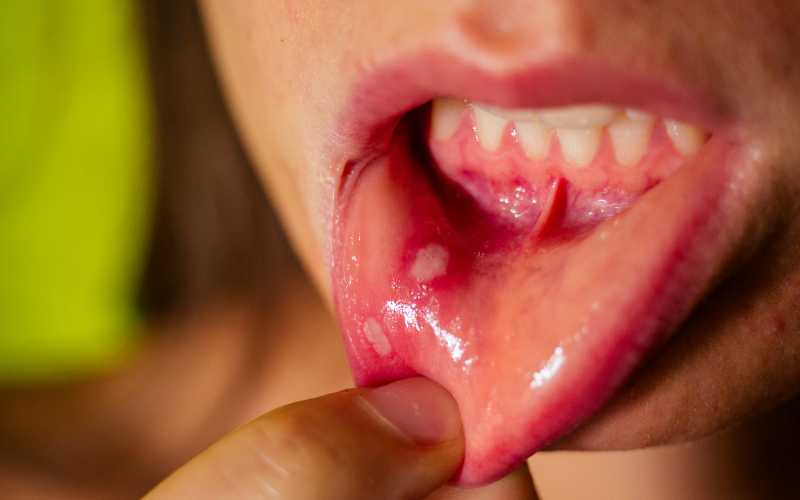
Canker sores in children are small ulcers that develop inside the mouth and may cause pain, a burning sensation, and difficulty eating, drinking, or brushing their teeth. Although they are very common and, in most cases, heal spontaneously within 7 to 14 days, they can cause significant discomfort.
In this article, we explain what canker sores are, their most common causes, how to recognize the symptoms, which treatments are available, and when you should seek advice from a healthcare professional.
What are canker sores?
Canker sores are small, superficial ulcers that affect the oral mucosa, the tissue lining the inside of the mouth. They most commonly develop on the inside of the lips, cheeks, tongue, and floor of the mouth.
They usually have the following characteristics:
A round or oval shape;
A white, yellowish, or grayish center;
A red border;
Pain when touched;
A burning sensation, particularly during meals.
Despite their small size, they can interfere with eating, oral hygiene, and the child’s general well-being.
What are the most common symptoms of canker sores in children?
The most common symptoms include:
Localized pain;
A burning sensation;
Pain when eating acidic, salty, or spicy foods;
Discomfort when speaking;
Sensitivity when brushing the teeth;
Refusal to eat in younger children;
Irritability.
When several canker sores occur at the same time, the pain may make it difficult for the child to eat and drink.
In general, a typical canker sore has a pale central area surrounded by a red border. The child may experience pain before the lesion becomes fully visible.
Why do children develop canker sores?
The exact cause of canker sores is still not fully understood. They are currently thought to result from a combination of several factors.
The factors most commonly associated with their development include:
Minor injuries inside the mouth;
Genetic predisposition;
Changes in the immune system response;
Physical or emotional stress;
Nutritional deficiencies;
Irritation caused by orthodontic appliances.
In most children, there is no single cause responsible for the development of the lesions.
Minor injuries
Accidental biting, hard foods, or toothbrushes with bristles that are too firm may damage the oral mucosa and contribute to the development of canker sores.
Orthodontic appliances
Friction caused by brackets or the metal components of orthodontic appliances may contribute to the development of canker sores.
Stress
Changes in routine, school tests, or other emotionally stressful situations may trigger episodes in children who are predisposed to them.
Diet
Foods such as citrus fruits, tomatoes, pineapple, or very spicy foods do not cause canker sores, but they may increase pain while the lesion is present.
Nutritional deficiencies
Recurring canker sores may be associated with deficiencies in:
Iron;
Vitamin B12;
Folic acid;
Zinc.
When canker sores occur frequently, the doctor may recommend blood tests to identify possible nutritional deficiencies. Confirming the cause helps guide care and determine the most appropriate approach.
Family predisposition
Children with close relatives who experience recurring canker sores may be more likely to develop the same problem.
Genetic predisposition may influence the age at which the sores first appear, their frequency, and their severity.
Can canker sores be associated with other health conditions?
In most children, they are not.
However, frequent or persistent episodes, particularly when accompanied by other symptoms, may require further clinical investigation.
Some of the conditions that may be associated with recurring canker sores include:
Celiac disease;
Crohn’s disease;
Ulcerative colitis;
PFAPA syndrome;
Behçet’s disease;
Neutropenia, a condition involving certain white blood cells.
Celiac disease and canker sores in children
Celiac disease has a recognized association with recurring canker sores. Digestive symptoms, changes in growth, fatigue, or weight loss may help guide the investigation.
PFAPA syndrome and canker sores in children
PFAPA syndrome causes repeated episodes of fever. Its name refers to its main symptoms:
Periodic fever;
Aphthous ulcers;
Sore throat;
Swollen lymph nodes in the neck.
The episodes may recur in a similar pattern. An assessment by a pediatrician can help determine the cause of the symptoms and guide treatment.
How can you distinguish a canker sore from other mouth lesions?
Not every lesion that develops in the mouth is a canker sore. Its location and appearance, as well as the presence of other symptoms, can help distinguish between different conditions.
Canker sore or cold sore?
Canker sores develop inside the mouth and have an inflammatory origin. They remain localized and usually heal without leaving a scar.
Cold sores generally cause small clusters of blisters on the outside of the lips or around the lip border. These lesions are caused by the herpes simplex virus.
A professional assessment can help clarify cases in which the appearance of the lesions raises concerns.
Canker sore or hand, foot, and mouth disease?
Hand, foot, and mouth disease is a viral infection that, in addition to mouth lesions, usually causes fever and spots or blisters on the hands, feet, and sometimes the diaper area.
An isolated canker sore does not cause these symptoms.
What are the main types of canker sores?
Canker sores can be classified according to their size, the number of lesions, and the time they take to heal.
Minor canker sores
These account for most cases.
Their main characteristics include:
A diameter of less than 1 cm;
One or only a few lesions;
Healing within 7 to 14 days;
No scarring.
Major canker sores
These are less common but tend to be more painful.
They may:
Be larger than 1 cm;
Persist for several weeks;
Make eating significantly more difficult;
Leave a scar.
Herpetiform canker sores
These are characterized by the simultaneous development of multiple small ulcers, which may merge and form a larger lesion.
Despite their name, they are not associated with the herpes virus. They are given this name because they appear as multiple grouped ulcers.
How can the pain caused by canker sores in children be relieved?
In most cases, treatment aims to relieve the symptoms while the lesion heals.
Measures that may help include:
Encouraging the child to drink fluids to maintain adequate hydration;
Choosing cool, soft foods;
Avoiding acidic or spicy foods;
Maintaining careful oral hygiene;
Applying orthodontic wax to areas affected by friction;
Avoiding repeatedly touching the lesion;
Using products recommended by a healthcare professional.
Applying salt, alcohol, or highly concentrated substances directly to the lesion may irritate the mucosa and increase the pain.
Encourage hydration
Pain may reduce the child’s willingness to drink. Drinking small amounts of water regularly helps maintain adequate hydration.
Choose soft, cool foods
During the days when the area is most sensitive, the child may better tolerate foods such as:
Yogurt;
Mashed foods;
Lukewarm soup;
Well-cooked rice or pasta;
Bananas;
Soft fresh cheese;
Mild smoothies.
Cool foods may provide temporary relief. Very hot temperatures tend to increase sensitivity.
Maintain careful oral hygiene
The child should continue brushing their teeth. A soft-bristled toothbrush and gentle movements help protect the affected area.
Good oral hygiene also reduces the buildup of food debris around the lesion.
Use age-appropriate products
Gels, sprays, and solutions are available that form a protective layer over the canker sore. This protection reduces contact with food and may relieve discomfort.
The choice of product should take into account:
The child’s age;
The location of the lesion;
The number of canker sores;
The severity of the pain;
The product’s ingredients.
A pharmacist can help select an appropriate product and explain how to use it correctly.
Use medication under professional guidance
Topical corticosteroids, which are applied directly to the lesion, are among the options used in recurring or more painful cases.
Their use in children should follow medical advice. The choice of product, dosage, and treatment duration depends on the child’s age and the characteristics of the lesions.
When should you consult a healthcare professional?
It is advisable to seek an assessment from a doctor or pharmacist when a child has canker sores and:
The canker sore persists for more than two weeks;
Episodes occur very frequently;
Several canker sores develop at the same time;
The child has a persistent fever;
The child has significant difficulty eating or drinking;
Weight loss, bowel changes, or other general symptoms occur.
In conclusion, canker sores in children are very common and usually benign. Although they can cause pain and discomfort, most heal spontaneously within a few days.
When they occur repeatedly, persist for several weeks, or are accompanied by other symptoms, it is important to seek medical assessment to identify the cause and determine the most appropriate treatment.
No. Canker sores are not contagious and do not spread from child to child.
In most cases, it clears up on its own within 7 to 14 days.
Yes. Some children develop recurrent aphthous stomatitis, with repeated episodes over the years.
During the healing process, it is advisable to avoid foods that are very acidic, salty, spicy, or hard, as they can increase pain.
Bibliographic References
Bilodeau, E. A., & Lalla, R. V. (2019). Recurrent oral ulceration: Etiology, classification, management, and diagnostic algorithm. Periodontology 2000, 80(1), 49–60. https://doi.org/10.1111/prd.12262
Gürkan, A., Özlü, S. G., Altıaylık-Özer, P., Kurtul, B. E., Karacan, C. D., & Şenel, S. (2015). Recurrent aphthous stomatitis in childhood and adolescence: A single-center experience. Pediatric Dermatology, 32(4), 476–480. https://doi.org/10.1111/pde.12577
Owczarek-Drabińska, J. E., Nowak, P., Zimoląg-Dydak, M., & Radwan-Oczko, M. (2022). The prevalence of oral mucosa lesions in pediatric patients. International Journal of Environmental Research and Public Health, 19(18), 11277. https://doi.org/10.3390/ijerph191811277
Stoopler, E. T., Villa, A., Bindakhil, M., Ojeda Díaz, D. L., & Sollecito, T. P. (2024). Common oral conditions: A review. JAMA, 331(12), 1045–1054. https://doi.org/10.1001/jama.2024.0953
Tags:
