

- Your cart is empty
- Continue shopping


Evening primrose and borage oil in menopause
-
admin
- Posted on
- Categories:Sem categoria, Women's Health
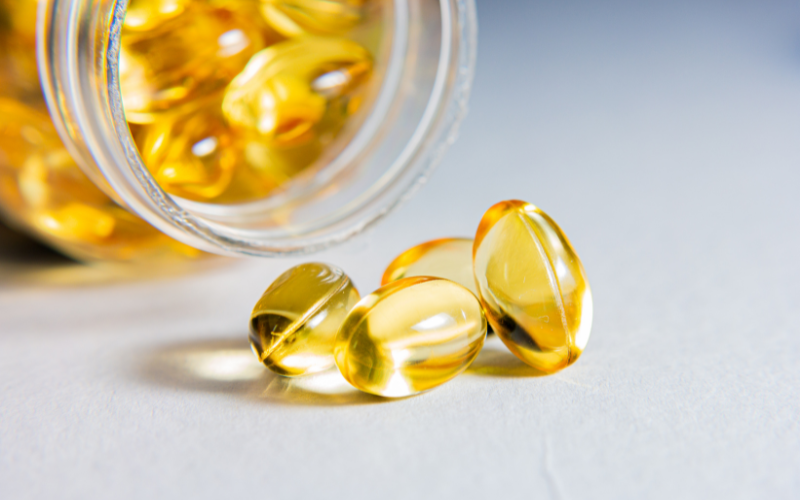
Menopause is a natural stage in a woman’s life, but it can cause symptoms that interfere with everyday well-being. Hot flashes, night sweats, sleep disturbances, irritability, dry skin, intimate discomfort, and mood swings are among the most common complaints.
When faced with these symptoms, many women look for natural remedies or dietary supplements. Some of the most popular options include evening primrose oil and borage oil, both of which are sources of gamma-linolenic acid, commonly known as GLA. But can these oils actually help relieve menopause symptoms? And are they safe for all women?
In this article, we explain what they are, how they work, what the scientific evidence says, and what precautions you should take before using them.
Menopause: Why Do Hot Flashes and Night Sweats Occur?
During the transition to menopause, estrogen production gradually decreases. This hormonal change can affect the brain’s temperature-regulating center, making the body more sensitive to small changes in temperature. This is why many women experience sudden sensations of heat, intense sweating, or waking during the night because they feel too hot.
These are known as vasomotor symptoms and mainly include hot flashes and night sweats. They can vary greatly from one woman to another. Some women experience only mild discomfort, while others have frequent and intense symptoms that affect their sleep, energy levels, and quality of life.
Hormone therapy remains one of the most effective options for moderate to severe vasomotor symptoms, but not every woman can or wants to use it. For this reason, many women seek nonhormonal alternatives, including supplements. However, the latest clinical reviews and guidelines emphasize that these options should be assessed critically and used with professional guidance.
What Is Evening Primrose Oil?
Evening primrose oil is extracted from the seeds of the Oenothera biennis plant. It is rich in omega-6 fatty acids, particularly:
Linoleic acid;
Gamma-linolenic acid, or GLA.
GLA is involved in the production of prostaglandins, substances that play a role in inflammatory, vascular, and hormonal processes. For this reason, evening primrose oil has been used in a range of situations, including breast tenderness, premenstrual syndrome, dry skin, and symptoms associated with menopause.
Does Evening Primrose Oil Help With Hot Flashes?
Evening primrose oil is often used by women seeking relief from certain symptoms associated with menopause, including hot flashes and night sweats.
However, its effects can vary from person to person, and there is no guarantee that it will reduce the frequency, duration, or intensity of these episodes. It should therefore not be viewed as the only solution for managing hot flashes.
When these symptoms are frequent, severe, or interfere with sleep and everyday well-being, it is important to seek advice from a healthcare professional. This makes it possible to assess the situation and determine which options are most appropriate for each woman.
What Is Borage Oil?
Borage oil is extracted from the seeds of the Borago officinalis plant. Like evening primrose oil, it is a source of GLA, although it generally contains a higher concentration of this fatty acid.
For this reason, it is often associated with skin health, skin comfort, and the regulation of inflammatory processes. Some women also use it during menopause, particularly when experiencing dry skin, skin sensitivity, or general discomfort.
Does Borage Oil Help With Menopause Symptoms?
Borage oil is also a source of gamma-linolenic acid, or GLA, a fatty acid that may contribute to normal body function and skin balance.
Although some women use it during menopause, it should not be considered a specific treatment for symptoms such as hot flashes, night sweats, or sleep disturbances. Responses can vary from one woman to another, and the results may not always be noticeable.
Before starting supplementation, it is advisable to seek guidance from a healthcare professional, particularly if you have a chronic health condition, regularly take medication, or experience severe and persistent symptoms.
Evening Primrose Oil vs. Borage Oil: Which Is Better During Menopause?
Although both oils contain GLA, it is not possible to state that one is clearly more suitable than the other during menopause.
Evening primrose oil and borage oil have different compositions, but a higher concentration of GLA does not necessarily mean better results in relieving symptoms such as hot flashes or night sweats.
The choice should take into account the purpose of supplementation, your health status, any medication you regularly take, and your individual needs. For this reason, it is advisable to seek guidance from a healthcare professional before starting either supplement.
Are These Oils Safe?
In general, evening primrose oil is well tolerated, although it may cause mild side effects such as nausea, abdominal pain, diarrhea, digestive discomfort, or headaches.
Borage oil may also cause nausea, belching, abdominal pain, or changes in bowel habits. However, its use requires additional caution because the plant may contain pyrrolizidine alkaloids, substances that can potentially damage the liver. It is therefore important to choose a high-quality, properly certified product that is free from these compounds.
The use of these supplements should be discussed with a healthcare professional beforehand, particularly in the case of:
Liver disease;
Pregnancy;
Breastfeeding;
Regular use of medication or other supplements.
Who Should Be Particularly Cautious?
Before taking evening primrose oil or borage oil, you should seek professional advice if you:
Take anticoagulant or antiplatelet medication;
Have a blood-clotting disorder;
Are due to undergo surgery or an invasive procedure;
Have liver disease;
Are pregnant, trying to become pregnant, or breastfeeding;
Take several medications or supplements at the same time;
Have severe, recent, or unusual symptoms.
Evening primrose oil may increase the risk of bleeding when used with anticoagulant or antiplatelet medication, and the same risk has also been reported for borage oil.
Natural Supplements Are Not Risk-Free
It is important to remember that “natural” does not automatically mean “safe” or “suitable for everyone.” Supplements may interact with medication, vary in the concentration of their active ingredients, and differ considerably in quality between brands.
In addition, menopause symptoms may require different approaches depending on factors such as:
Age;
Severity of symptoms;
Existing health conditions;
Family history;
Cardiovascular risk;
Bone health;
Sleep;
Mental health;
Current medication.
Supplementation should therefore be viewed as a possible form of support, not as a substitute for clinical assessment when symptoms have a significant impact on quality of life.
The Role of the Pharmacy in Menopause Support
A pharmacy can provide support in several aspects of menopause, from helping women choose supplements safely to monitoring symptoms, reviewing medication, and identifying signs that require medical assessment.
At Farmácia Dias Machado, our team can help you:
Determine whether a supplement is suitable for you;
Assess the risk of interactions with medication;
Identify possible contraindications;
Understand the most appropriate way to use the supplement;
Recognize signs that require referral to a doctor;
Identify lifestyle habits that may improve your well-being during this stage.
Menopause should not be experienced with unanswered questions or ongoing discomfort. There are options that may improve quality of life, but they should always be tailored to each woman.
Menopause Supplements: Making an Informed Decision
Evening primrose oil and borage oil are supplements rich in gamma-linolenic acid, or GLA, and are often sought by women who wish to relieve some of the discomfort associated with menopause.
However, there is no guarantee that these supplements will reduce hot flashes, night sweats, or other changes associated with this stage of life. Their effects can vary from one woman to another, and a higher concentration of GLA does not necessarily produce better results.
The decision to take evening primrose oil or borage oil should take into account your symptoms, health status, regular medication, and the purpose of supplementation.
In conclusion, before starting either supplement, it is advisable to speak to a pharmacist or doctor, particularly if you have a chronic condition or regularly take medication or other supplements.
No. Evening primrose oil does not guarantee the disappearance of hot flashes. Some women may experience a slight improvement in intensity, but results vary, and there is not always a reduction in the frequency or duration of the episodes.
It is impossible to say that one is better than the other. Although borage oil has a higher concentration of GLA, this does not necessarily mean it yields better results in relieving menopausal symptoms. The choice should be based on each woman’s individual needs and the guidance of a healthcare professional.
It depends on your health status, medications, and goals. Although generally well-tolerated by adults for short periods, you should seek advice before starting, especially if you take anticoagulants, antiplatelet drugs, or other supplements.
It may, especially if the product is not certified free of pyrrolizidine alkaloids. People with liver disease should avoid it or use it only under medical supervision.
No. Evening primrose oil and borage oil do not replace hormone therapy or other clinical options indicated for moderate to severe menopausal symptoms.
You should seek medical advice if hot flashes are very frequent or disrupt your sleep; if symptoms such as unexplained weight loss, intense palpitations, postmenopausal vaginal bleeding, chest pain, or shortness of breath occur; or if you have questions about the safety of any supplement.
Bibliographic References
American College of Obstetricians and Gynecologists. (2014). Practice Bulletin No. 141: Management of menopausal symptoms. Obstetrics & Gynecology, 123(1), 202–216. https://doi.org/10.1097/01.AOG.0000441353.20693.78
Chenoy, R., Hussain, S., Tayob, Y., O’Brien, P. M. S., Moss, M. Y., & Morse, P. F. (1994). Effect of oral gamolenic acid from evening primrose oil on menopausal flushing. BMJ, 308(6927), 501–503. https://doi.org/10.1136/bmj.308.6927.501
da Costa Hime, L. F. C., Carvalho Lopes, C. M., Roa, C. L., Zuchelo, L. T. S., Baracat, E. C., de Andrade, J., & Soares, J. M., Jr. (2021). Is there a beneficial effect of gamma-linolenic acid supplementation on body fat in postmenopausal hypertensive women? A prospective randomized double-blind placebo-controlled trial. Menopause, 28(6), 699–705. https://doi.org/10.1097/GME.0000000000001740
Farzaneh, F., Fatehi, S., Sohrabi, M. R., & Alizadeh, K. (2013). The effect of oral evening primrose oil on menopausal hot flashes: A randomized clinical trial. Archives of Gynecology and Obstetrics, 288, 1075–1079. https://doi.org/10.1007/s00404-013-2852-6
Franco, O. H., Chowdhury, R., Troup, J., Voortman, T., Kunutsor, S., Kavousi, M., Oliver-Williams, C., & Muka, T. (2016). Use of plant-based therapies and menopausal symptoms: A systematic review and meta-analysis. JAMA, 315(23), 2554–2563. https://doi.org/10.1001/jama.2016.8012
Kronenberg, F., & Fugh-Berman, A. (2002). Complementary and alternative medicine for menopausal symptoms: A review of randomized, controlled trials. Annals of Internal Medicine, 137(10), 805–813. https://doi.org/10.7326/0003-4819-137-10-200211190-00009
Low Dog, T. (2005). Menopause: A review of botanical dietary supplements. The American Journal of Medicine, 118(12 Suppl. 2), 98–108. https://doi.org/10.1016/j.amjmed.2005.09.044
National Center for Complementary and Integrative Health. (2024). Evening primrose oil: Usefulness and safety. NCCIH.
https://www.nccih.nih.gov/health/evening-primrose-oil
Pinkerton, J. V. (2020). Hormone therapy for postmenopausal women. The New England Journal of Medicine, 382(5), 446–455. https://doi.org/10.1056/NEJMcp1714787
The North American Menopause Society. (2023). The 2023 nonhormone therapy position statement of The North American Menopause Society. Menopause, 30(6), 573–590. https://doi.org/10.1097/GME.0000000000002200
Thevi, T., De, S., & Soe, H. H. K. (2024). Evening primrose oil for menopause hot flashes: Systematic review and meta-analysis. Journal of Menopausal Medicine, 30(3), 127–134. https://doi.org/10.6118/jmm.23038
Available at PubMed: https://pubmed.ncbi.nlm.nih.gov/39829189/
Tags:
