


- Your cart is empty
- Continue shopping


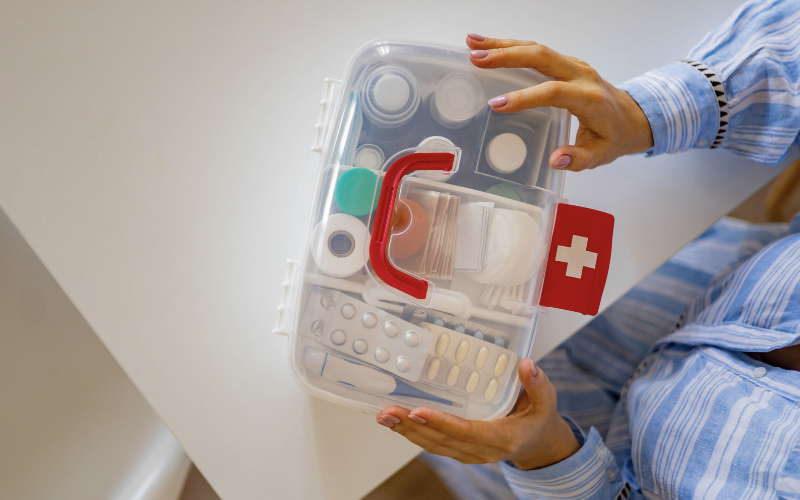
Minor accidents are part of everyday life for many families. Cuts, falls, insect bites, minor burns, or episodes of fever can happen at home, at school, or during outdoor activities. Although not all of these situations can be prevented, being prepared makes it possible to act quickly, safely, and effectively. Having a well-organized first aid kit for children is therefore a simple way to deal with the most common situations until advice from a healthcare professional can be obtained. In addition to allowing for immediate action, it can help reduce parents’ anxiety and provide greater comfort to the child during the first moments following an accident.
However, a first aid kit is not a substitute for medical assessment and should not include medications selected without considering the child’s age, weight, or health condition. Its purpose is to provide the essential materials needed to administer first aid safely while assessing whether it is necessary to contact a pharmacy, a doctor, SNS 24, or 112 in an emergency.
Throughout this article, we explain what a children’s first aid kit should contain, how to organize it correctly, and in which situations first aid is not enough and medical assistance is essential.
The First Aid Kit
A well-organized kit prevents you from having to search frantically for bandages, gauze pads, or medications when an accident happens.
The contents of the kit should take the following into account:
The number of people in the family;
The children’s ages;
Any allergies or chronic health conditions;
The family’s usual activities;
The time required to access healthcare;
The caregivers’ knowledge of first aid.
A family with a child who has asthma, diabetes, or a severe allergy will have different needs from a family with no known health conditions.
A home first aid kit should also be different from a small travel kit. At home, you can keep a more comprehensive box. For outings, vacations, or outdoor activities, prepare a smaller version adapted to the destination.
What Should a First Aid Kit for Children Contain?
There is no single kit that is suitable for every family. However, certain essential materials can help you respond to the most common situations.
The following list is based on first aid recommendations from the American Heart Association and the American Red Cross.
Families are advised to adapt the contents to the needs of each child or family and to check expiration dates regularly.
1. Protective and Hygiene Supplies
The kit should contain:
Disposable latex-free gloves, preferably nitrile;
Protective masks;
Hand sanitizer;
Small bags for disposing of used materials;
A CPR face shield, provided caregivers have been trained to use it.
Before providing assistance, the adult should protect themselves from contact with blood, secretions, or other bodily fluids. Gloves should therefore always be worn when blood is present. After providing care, remove them without touching the outer surface and place them in a sealed bag.
2. Supplies for Cuts and Wounds
Cuts and scrapes are among the most common childhood accidents. The materials included in the kit should make it possible to clean the area, protect the wound, and control minor bleeding.
Include:
Adhesive bandages in different sizes;
Sterile gauze pads;
Larger absorbent dressings;
Gauze bandages;
Elastic bandages;
Medical adhesive tape;
Single-dose sterile saline solution;
Bandages designed for fingers or joints;
Tubular net bandages to hold dressings in place, if necessary.
Single-dose sterile saline solution is preferable for cleaning wounds because it is practical and reduces the risk of contamination associated with containers that have been open for a long time.
In the event of bleeding, gauze pads are essential for applying direct and continuous pressure to the wound.
3. Basic Instruments
Some simple instruments make the kit more practical:
Blunt-tip scissors;
Fine-tip tweezers;
Digital thermometer;
Small flashlight;
Oral syringes for liquid medications;
Suitable measuring cups;
Instant cold packs;
Safety pins;
Emergency thermal blanket.
For example, tweezers may help remove a small superficial splinter.
An oral syringe is one of the most important items in a children’s first aid kit. Household spoons do not measure medication accurately.
4. Supplies for Burns
The kit may include:
Sterile non-stick dressings;
Clean gauze pads;
Plastic wrap, to cover the affected area when a clean, lint-free dressing is not available;
Sterile saline solution.
5. Supplies for Sprains and Minor Injuries
For minor muscle or joint injuries, it is useful for the kit to contain:
Instant cold packs;
Elastic bandages;
Triangular bandages;
Padded dressings;
A flexible splint, provided the adult knows how to apply it.
The cold pack should be wrapped in a cloth. Avoid placing it directly on the skin. An elastic bandage should also not be wrapped too tightly.
Which Medications Can Be Included in the Kit?
Medications should be selected with the support of a pharmacist, the child’s doctor, or pediatrician. The formulation and dose must be appropriate for the child’s weight and age.
Always store medications in their original packaging. Keep the package leaflet and the measuring device supplied with the product.
Acetaminophen
Acetaminophen may be used to relieve pain or discomfort associated with fever. The pediatric dose depends on the child’s weight and the concentration of the medication.
It is important to confirm:
How many milligrams are contained in each milliliter;
The correct dose for the child’s weight;
The interval between doses;
The maximum number of doses per day;
Whether any other medication taken by the child also contains acetaminophen.
Avoid alternating acetaminophen and ibuprofen without advice from a healthcare professional.
Ibuprofen
Ibuprofen may be an option for pain, fever, or inflammation in certain children. However, it is not suitable for every age group or situation.
As a general rule, it should not be given to babies or children without medical advice.
Oral Rehydration Solution
Oral rehydration solutions help replace water and minerals lost during episodes of vomiting or diarrhea.
Choose sachets designed to be mixed with the exact amount of water stated on the package. Do not alter the concentration. A solution that is too concentrated or too diluted may not have the intended effect.
Oral Antihistamine
An antihistamine may be useful for certain mild allergic reactions involving itching. Ask a healthcare professional which medication is appropriate and when it can be safely included or administered.
An antihistamine is not a substitute for epinephrine in the event of a severe allergic reaction.
Medications That Should Only Be Used With Professional Advice
A children’s emergency kit should contain only medications that have been appropriately selected and recommended for that specific child.
Avoid administering the following without professional advice:
Acetylsalicylic acid, also known as aspirin;
Antibiotics left over from previous treatments;
Prescription medications prescribed for someone else;
Antidiarrheal medications intended for adults;
Medications for nausea or vomiting;
Cough syrups without medical advice;
Creams containing antibiotics or corticosteroids.
Always seek advice from a pharmacist or doctor.
What Should Be Included When the Child Has a Known Health Condition?
Children with severe allergies, asthma, diabetes, or other health conditions need a personalized kit.
Severe Allergy
If the child is at risk of anaphylaxis, the kit should contain:
A prescribed epinephrine auto-injector;
A second auto-injector, if recommended;
A written emergency action plan;
Identification of known allergens;
Caregiver contact details;
The devices’ expiration dates.
Anaphylaxis is a severe allergic reaction that can affect breathing and circulation. Epinephrine is the first-line treatment. An antihistamine must not delay its administration. After using the auto-injector, call 112.
Asthma
The kit may include:
A prescribed rescue inhaler;
A spacer;
An age-appropriate mask;
An asthma action plan;
Simple instructions explaining when to call 112.
Do not share the inhaler with other people. Check the number of doses remaining and the expiration date.
Diabetes or Risk of Hypoglycemia
Follow the plan established by the doctor caring for the child. The kit should include:
A fast-acting source of glucose;
A blood glucose meter;
Test strips that are within their expiration date;
Prescribed medication;
An action plan;
Contact details for the healthcare team.
Which Contact Details Should Be Kept Inside the Kit?
Keep a laminated sheet containing the essential contact details:
Medical emergency services: 112;
Poison Information Center: 800 250 250;
SNS 24 helpline: 808 24 24 24;
Contact details for the child’s doctor or pediatrician;
Contact details for the family’s usual pharmacy;
Contact details for the parents or legal guardians;
The family’s full address;
Information about allergies and chronic health conditions.
Call 112 in life-threatening situations, such as breathing difficulties, loss of consciousness, a prolonged seizure, severe bleeding, or a serious accident. The SNS 24 helpline provides triage and guidance for health problems that do not represent an immediate emergency.
The Poison Information Center is available 24 hours a day. In the event of possible poisoning, keep the product packaging nearby and provide the child’s age, the estimated amount involved, the time of exposure, and any symptoms observed. Do not induce vomiting unless specifically instructed to do so by the Poison Information Center.
Where Should the First Aid Kit Be Stored?
The kit should be kept in a place known to all adults but out of the reach and sight of children.
Choose an area that is:
Dry;
Protected from heat;
Away from direct sunlight;
Away from the bathroom;
Easy for an adult to access;
Locked or placed in an elevated location.
Avoid leaving medications inside a car for long periods. Heat and temperature fluctuations may affect their stability.
A sturdy box with compartments and a handle makes organization easier. Label the different sections: wounds, burns, instruments, medications, and contact details.
How Often Should the Kit Be Checked?
Review the kit regularly and every time an item is used.
During the inspection:
Check expiration dates;
Replace medications that have been open longer than recommended;
Discard damaged packaging;
Restock any gauze pads, gloves, or bandages that have been used;
Test the thermometer;
Confirm the recorded pediatric doses;
Update contact details;
Check prescribed emergency medications;
Make sure all instructions remain legible.
Do not keep medications if the name, concentration, or expiration date is no longer visible.
The Kit Should Be Supplemented With First Aid Training
Having the right supplies is important, but knowing when and how to use them makes an even greater difference.
Parents, family members, and other caregivers should consider training in:
Pediatric first aid;
Cardiopulmonary resuscitation;
Choking response and airway obstruction relief;
Bleeding control;
Seizure response;
Epinephrine administration;
Prevention of accidents in the home.
Ideally, families should attend first aid and resuscitation courses specifically designed for babies and children.
Choking response techniques vary depending on whether the patient is a baby or an older child. For this reason, they should be learned from qualified professionals and reviewed regularly.
When Should You Call 112 Immediately?
Call 112 if the child presents with:
Difficulty breathing;
Blue lips or skin;
Loss of consciousness;
Absence of normal breathing;
Airway obstruction;
A prolonged seizure or several consecutive seizures;
Heavy bleeding that does not stop with direct pressure;
An allergic reaction involving breathing difficulties or swelling of the tongue;
A large, electrical, or chemical burn;
A fall followed by an altered level of consciousness;
A suspected serious head or spinal injury;
Poisoning accompanied by severe symptoms.
Avoid transporting the child yourself when doing so could worsen the situation. Follow the instructions provided by the 112 emergency operator.
Conclusion
A first aid kit for children should be simple, organized, and adapted to the family’s needs.
Adhesive bandages, gauze pads, gloves, sterile saline solution, a thermometer, and basic instruments can help you respond to minor accidents. Medications require more careful selection. The dose must be appropriate for the child’s weight and the product’s concentration.
Children with severe allergies, asthma, or other health conditions need their prescribed medication and an up-to-date emergency action plan.
Organizing a first aid kit should be complemented by first aid training. Knowing how to recognize an emergency and ask for help at the right time is just as important as having the necessary supplies.
The Farmácia Dias Machado team can help you select suitable products, review the contents of your first aid kit, and answer questions about the safe use of pediatric medications.
For most families, a single kit is sufficient. However, each child must have their prescribed medications clearly labeled. This is especially important in cases of severe allergies, asthma, diabetes, or other chronic conditions.
It is preferable to keep medications intended for children separate. This measure reduces the risk of errors regarding the product, formulation, or dosage.
It is not an essential product for cleaning minor wounds. In most cases, irrigation with potable water or saline solution is sufficient. Ask a pharmacist for advice if you believe an antiseptic is necessary.
The most important immediate care step is to place the affected area under cool running water for about 20 minutes. Do not apply creams, ice, or greasy substances before this step. After cooling the area, a healthcare professional can recommend the most suitable product.
Fever does not always require medication. Paracetamol can be used for pain or discomfort, provided the dose is appropriate for the child’s weight. Seek medical advice for young babies or if there are concerning symptoms.
Yes. Prepare a travel version containing essential supplies, regular medications, prescriptions, emergency contacts, and the child’s health information. Also, verify the emergency numbers for the destination country.
Replace medications that are expired, have damaged packaging, or have exceeded their shelf life after opening. Note the opening date on liquid medications when this information is relevant.
Bibliographic References
American Academy of Pediatrics. (2026). A parent’s guide to over-the-counter medicines for children. HealthyChildren.org.
American Red Cross. (n.d.). Make a first aid kit: What to include.
Arencibia, Z. B., & Choonara, I. (2012). Balancing the risks and benefits of the use of over-the-counter pain medications in children. Drug Safety, 35(12), 1119–1125. https://doi.org/10.1007/BF03261998
Cantrell, P., Hoffmann, J., Yuknis, M., Mathison, D., Kafer, L., Skatrud, A., Committee on Practice and Ambulatory Medicine, Committee on Pediatric Emergency Medicine, & Section on Urgent Care Medicine. (2026). Preparation for pediatric emergencies in the office: Technical report. Pediatrics, 157(5), e2026076622. https://doi.org/10.1542/peds.2026-076622
Hewett Brumberg, E. K., Douma, M. J., Alibertis, K., et al. (2024). 2024 American Heart Association and American Red Cross guidelines for first aid. Circulation, 150, e519–e579. https://doi.org/10.1161/CIR.0000000000001281
National Institute of Medical Emergency. (n.d.). Poison Information Centre.
Nelson, M. (2026). First aid: Guidelines from the American Heart Association and American Red Cross. American Family Physician.
National Health Service. (2026). Burns and scalds.
SNS 24. (2026). When to call SNS 24 or INEM.
Tags:
