

- Your cart is empty
- Continue shopping


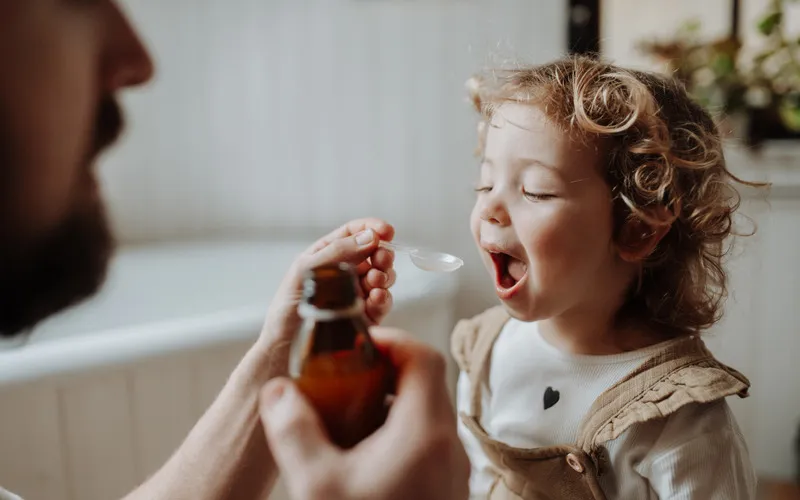
From fever to vaccines, Machadinho explains why not all medicines do the same thing.
A fever reducer, an antibiotic, insulin, and a vaccine have something in common. They can all help our bodies.
But they don’t do it in the same way.
Some help alleviate what we feel. Others act on the cause of certain diseases. Some replace substances that the body needs. Others help prevent diseases.
So, ultimately, how do medicines help our bodies?
First, what is a medicine?
A medicine contains one or more substances that produce certain effects in the body.
But there is a fundamental idea.
Different medications can do different things.
That’s why there isn’t one medication that works for every situation.
Let’s look at some of the ways they can help.
1. Some medications help relieve symptoms
When we are sick, we may have symptoms such as pain or fever.
There are medications that help reduce some of these symptoms.
But relieving what we feel doesn’t necessarily mean treating what caused the symptom.
Think of a pain. If a medicine helps reduce it, we know that the symptom has improved. But that, by itself, doesn’t mean that the cause of the pain has disappeared.
Relieving a symptom and treating its cause are not always the same thing.
2. Some medications act on the cause of certain diseases
In some situations, there are medications that act on what is causing the disease.
Antibiotics are an example.
They can be used to treat certain infections caused by bacteria.
But there’s something important to know.
Antibiotics don’t work against viruses.
Therefore, they are not suitable for all infections.
There are also diseases for which there is no medication that directly eliminates their cause.
3. Some medications replace something the body needs
Our bodies produce many substances important for functioning.
But sometimes it may not produce one of them in sufficient quantity.
Insulin is an example.
Insulin is an important hormone for controlling the amount of glucose in the blood. In type 1 diabetes, the body produces little or no insulin, so it needs to be administered.
In this case, the medication helps provide the body with a substance it needs.
4. Some medications help prevent diseases
Medications are not only used after a disease appears.
Vaccines are an example.
They help the immune system prepare a response against certain agents capable of causing disease.
We can think of the immune system as the set of defense mechanisms of our body.
Through vaccination, these defenses can be prepared to recognize and respond to certain agents in the future.
This does not mean that a vaccine always prevents a person from getting sick. Protection depends on the vaccine, the disease, and other factors.
Machadinho asks
How does a medicine know where to act?
The medicine doesn’t know.
It doesn’t think, it doesn’t seek out the disease, and it doesn’t choose where it wants to act.
The substances present in medications have certain characteristics. When they enter the body, they can interact with cells and other structures and produce certain effects.
Therefore, different medications can produce different effects.
It is also for this reason that a medication suitable for one situation may not be suitable for another.
Why do we have tablets, syrups, drops, and creams?
Medications can also be presented in very different ways.
They are tablets, capsules, syrups, drops, creams, ointments, inhalers, and many other presentations.
The form used depends, among other factors, on the medication, the location where the effect is desired, how it should be administered, and the characteristics of the person using it.
Therefore, a cream applied to the skin and a medication taken orally are not just two different ways of presenting the same thing.
Each medication should be used as directed.
If I know the symptom, can I choose the medication?
No.
Having a fever, pain, cough, or other symptom doesn’t mean you know which medication is right for you.
It also doesn’t necessarily mean you need to take a particular medication.
Two people can have similar symptoms and need different care.
And a medication used previously may not be suitable for a new situation.
The body also helps in recovery.
Medications don’t do all the work.
Our bodies have their own mechanisms for defense, repair, and recovery.
Therefore, not all situations require medication.
When necessary, medications can help the body in different ways.
Machadinho Challenge
Can you figure out what’s happening in each situation?
A medicine helps reduce pain.
You are relieving a symptom.
A vaccine prepares the body’s defenses.
It is helping to prevent a disease.
Insulin provides the body with a hormone it needs.
It is replacing something the body needs.
An antibiotic treats a specific infection caused by bacteria.
It is acting on the cause of that disease.
Did you get all four right?
Then you’ve already discovered one of the most important ideas in this article.
Medicines can help the body in different ways.
Machadinho's Rule
After learning all this, there’s one thing we don’t need to do.
Choose medications on our own.
If something isn’t right, the rule is simple.
I don’t feel well. I call an adult.
Frequently Asked Questions
No. Medications can have different functions. Some relieve symptoms, others act on the cause of certain diseases, some replace substances necessary for the body, and others help prevent diseases.
No. The substances present in medications produce effects through the way they interact with the body.
Because medications are different and may need to be used in different ways. The presentation depends on the medication, the intended effect, and other factors.
Not necessarily. Similar symptoms can arise for different reasons. Having the same symptom doesn’t mean you need the same medication.
No. The body has its own defense and recovery mechanisms, and not all situations require medication.
To save
Medicines can help the body in different ways.
And when something isn’t right…
If I don’t feel well, I call an adult.
References and sources
INFARMED. Medicines at Home.
Health Surveillance Secretariat. Information on medicines, vaccination and disease prevention.
World Health Organization. Information on medicines, vaccination and appropriate use of antibiotics.
Tags:
