




- Your cart is empty
- Continue shopping


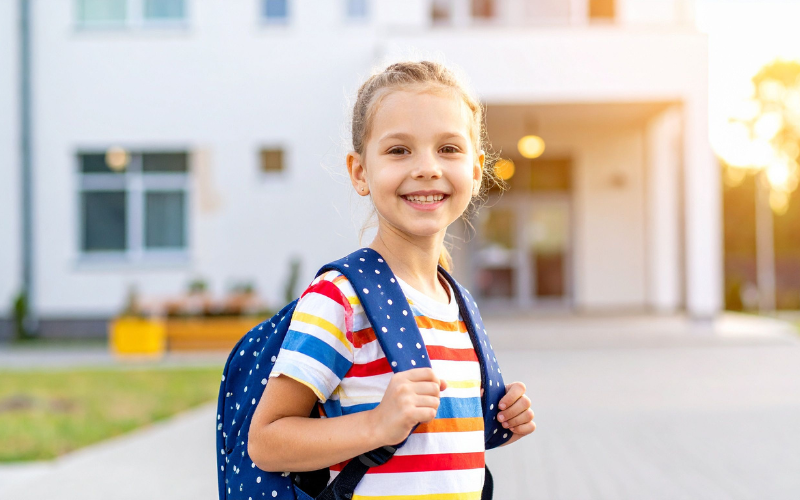
Choosing the right school backpack is an important decision for a child’s comfort and health throughout the school year. Every day, backpacks carry textbooks, notebooks, school supplies, electronic devices, lunch boxes, and water bottles. When a backpack is the wrong size, is too heavy, or is not used correctly, it can place additional strain on the spine, shoulders, and neck.
To compensate for excess weight, many children adopt incorrect postures, such as leaning their head and torso forward, raising their shoulders, or changing the way they walk. Over time, these adjustments may contribute to muscle fatigue, discomfort, and back pain.
Choosing the right backpack is the first step toward preventing these problems. However, it is also essential to control the amount of weight being carried, organize the contents correctly, and adjust the straps so that the backpack rests securely against the child’s body.
In this article, we explain how to choose the most appropriate school backpack, how much it should weigh, how to adjust it correctly, and what precautions can help reduce the risk of discomfort and back pain.
Why Is It Important to Choose the Right School Backpack?
Children’s and teenagers’ spines are still developing. Although carrying a backpack does not, by itself, cause a structural spinal deformity, an excessive load may force the body to adopt compensatory positions.
The most common consequences of a backpack that is too heavy or poorly adjusted include:
- shoulder, neck, or back pain;
- muscle tension and fatigue;
- marks or redness caused by the straps;
- excessive forward leaning of the torso;
- changes in the position of the head and shoulders;
- discomfort while walking;
- tingling or numbness in the arms when the straps place excessive pressure on the shoulders.
Carrying a loaded backpack is associated with immediate changes in posture and walking patterns. Heavier loads tend to increase forward bending of the head and torso, activation of the postural muscles, and the level of discomfort experienced by the child.
How Much Should a Child’s Backpack Weigh?
As a general rule, the total weight of the backpack, including all the items inside it, should not exceed approximately 10% of the child’s body weight.
To calculate this amount, simply multiply the child’s weight by 0.10.
Examples of the Recommended Maximum Weight
- A child who weighs 20 kg should ideally carry no more than 2 kg.
- A child who weighs 25 kg should carry no more than 2.5 kg.
- A child who weighs 30 kg should carry no more than 3 kg.
- A child who weighs 35 kg should carry no more than 3.5 kg.
- A child who weighs 40 kg should carry no more than 4 kg.
This limit should be understood as a preventive guideline rather than an absolute guarantee that the child will not experience discomfort. The child’s age, physical condition, carrying time, walking distance, and any existing pain or musculoskeletal problems should also be considered.
Loads corresponding to approximately 15% of body weight have been associated with greater forward bending of the head and torso, reduced lumbar curvature, increased muscle activation, and higher levels of discomfort. For this reason, it is advisable to prevent the backpack from reaching or exceeding this percentage.
The relationship between the relative weight of a backpack and pain has also been observed in children and teenagers, reinforcing the importance of regularly checking the items being carried.
How to Choose an Appropriate School Backpack
A backpack should be selected according to the child’s size and body structure, rather than solely based on color, pattern, or favorite characters.
Choose a Size That Is Proportional to the Child
A backpack that is too large makes it easier to accumulate unnecessary items and may hang below the waist. On the other hand, a backpack that is too small may require the contents to be distributed unevenly or carried in additional bags.
The width of the backpack should not significantly exceed the width of the child’s torso. When worn, it should follow the shape of the back without sitting too high near the neck or hanging below the waist.
Whenever possible, the child should try on the backpack before it is purchased, ideally with some weight inside it, to make sure they can put it on, take it off, and walk comfortably.
Choose Two Wide, Padded Shoulder Straps
The backpack should have two shoulder straps that are sufficiently wide, padded, and adjustable.
Wide straps help distribute pressure over a larger area. Padding reduces direct pressure on the shoulders, while adjustable straps help keep the backpack close to the body.
Straps that are too long cause the backpack to sit too low and swing while the child walks, increasing the effort required to stabilize the load.
Check the Back Panel
A slightly structured, padded back panel helps to:
- keep objects away from the child’s back;
- prevent books or rigid materials from creating localized pressure;
- stabilize the load;
- keep the backpack close to the torso;
- improve comfort while carrying it.
The panel does not need to be excessively rigid, but it should prevent the contents from completely changing the shape of the backpack.
Look for a Hip Belt and Chest Strap
A hip belt fastens around the waist or upper part of the pelvis. When adjusted correctly, it helps stabilize the backpack and distribute part of the load, reducing movement while the child walks.
A chest strap brings the shoulder straps closer together and prevents them from slipping toward the outside of the shoulders. It can be particularly useful on longer walks or when the child regularly travels to school on foot.
These accessories are only effective when properly adjusted. They should not be so tight that they restrict breathing or movement.
Choose a Lightweight Backpack
The weight of the empty backpack also counts toward the recommended limit. Models with heavy frames, wheels, bulky decorations, or unnecessary accessories may use a significant portion of the available weight allowance before any school supplies are added.
Parents should look for a balance between light weight, durability, and stability.
Choose a Backpack With Several Compartments
Compartments make it easier to organize the contents and distribute the weight. A backpack with only one large compartment may allow books, pencil cases, and other items to shift while the child is moving.
Useful features include:
- a rear compartment for books and heavier equipment;
- internal dividers;
- balanced side pockets;
- smaller compartments for lightweight objects.
How to Organize the Inside of the Backpack Correctly
The way objects are distributed can influence both the comfort and stability of the backpack.
Place the Heaviest Objects Close to the Back
Books, binders, laptops, and other heavy objects should be placed in the compartment closest to the back panel.
The farther the load is from the body, the greater the leverage effect and the effort required to keep it balanced. Keeping heavy objects close to the back helps bring the backpack’s center of gravity closer to the child’s center of gravity.
Keep the Load Centered
Heavy objects should be placed close to the center of the backpack, avoiding a concentration of weight on only one side.
Objects placed in the side pockets should also be balanced. For example, when a water bottle is placed on one side, an item of similar weight may be placed in the opposite pocket, provided this does not unnecessarily increase the total load.
Avoid Loose Objects
Pencil cases, toys, chargers, and other small objects should be stored in appropriate compartments. When left loose, they can move around, create an imbalance, and cause pressure points against the child’s back.
Carry Only What Is Necessary
The backpack should be prepared according to the class schedule for the following day. Books, notebooks, sports equipment, and supplies that will not be needed should be left at home or, whenever possible, stored in a school locker.
It is also important to check the backpack regularly for:
- old worksheets and assignments;
- empty containers or packaging;
- toys;
- unnecessarily large water bottles;
- pencil cases containing too many supplies;
- books that can remain at school.
How to Put On and Carry a Backpack Correctly?
Even a backpack with appropriate features can cause discomfort when it is used incorrectly.
Always Use Both Shoulder Straps
Carrying a backpack over one shoulder concentrates the load on one side and may cause the torso to lean sideways, one shoulder to rise, and the muscles on each side of the body to work unevenly.
Both shoulder straps should always be used, even for short distances.
Adjust the Straps to the Child’s Body
The straps should be adjusted so that the backpack:
- remains close to the back;
- does not swing while the child walks;
- remains centered;
- does not press against the neck;
- does not hang below the waist;
- allows the arms to move freely.
The load should remain in the middle area of the back, close to the transition between the thoracic and lumbar regions. A position that is too high may increase discomfort in the neck and shoulders, while a position that is too low may increase discomfort around the waist.
Fasten the Hip Belt
When the backpack has a hip belt, it should be used, particularly when the child walks longer distances or travels over uneven ground.
The belt should rest on the upper part of the pelvis without tightening around the abdomen. The chest strap may also be adjusted to prevent the shoulder straps from moving apart.
Bend the Knees When Lifting the Backpack
To lift a backpack from the floor, the child should:
- Move close to the backpack.
- Bend their knees.
- Keep the backpack close to the body.
- Lift it using the leg muscles.
- Whenever possible, place it on a raised surface before putting their arms through the straps.
The child should avoid bending only at the waist and lifting a heavy backpack while keeping the knees straight.
Avoid Carrying the Backpack for Long Periods
The amount of time the backpack is carried also influences discomfort. Whenever possible, the child should remove the backpack while waiting for transportation, during extended breaks, or when standing still for a prolonged period.
At school, lockers, storage cabinets, or shared learning materials may help reduce both the amount of time the backpack is carried and its overall weight.
Can a Heavy Backpack Cause Scoliosis?
Scoliosis is a three-dimensional change in the spine and is not simply caused by poor posture or carrying books.
However, an excessively heavy backpack may contribute to pain, muscle fatigue, and temporary changes in posture. Therefore, the fact that backpacks do not cause scoliosis does not mean that their weight or the way they are carried should be ignored.
A backpack should also not be considered the only possible cause of back pain. Discomfort may be related to physical activity, long periods of sitting, school furniture that is not properly adapted to the child, growth, injuries, or other health conditions.
Signs That a Backpack May Not Be Appropriate
Parents should observe the child while they are wearing the backpack and watch for the following signs:
- the child needs help putting on or removing the backpack;
- the child leans significantly forward;
- the child raises or rotates their shoulders;
- the straps leave deep marks or persistent redness;
- the child reports neck, shoulder, or back pain;
- the child experiences numbness or tingling in the arms;
- the child changes the way they walk;
- the child frequently complains about the backpack’s weight;
- the backpack visibly hangs below the waist.
When these signs appear, the backpack should be weighed, unnecessary materials should be removed, the contents should be reorganized, and all straps should be readjusted.
When Should You Seek Medical Advice?
Back, neck, or shoulder pain should not be ignored when it occurs frequently, is severe, or does not improve after reducing the load and correcting how the backpack is used.
Medical advice should be sought if the child experiences:
- persistent pain or pain that becomes progressively more severe;
- pain that interferes with sleep, school, or daily activities;
- weakness, numbness, or tingling in an arm or leg;
- changes in the way they walk;
- loss of strength or difficulty moving a limb;
- pain accompanied by fever, weight loss, or a general feeling of illness;
- pain following a fall or injury;
- a visible change in the spine or pronounced shoulder asymmetry.
The American Academy of Orthopaedic Surgeons advises parents not to ignore persistent pain associated with backpack use and to seek an evaluation when symptoms do not improve.
School Backpack Checklist
Before the child leaves home, check the following:
- Does the backpack weigh less than 10% of the child’s body weight?
- Does it contain only the materials needed for that day?
- Are the heaviest objects positioned close to the back?
- Is the weight distributed evenly?
- Is the child using both shoulder straps?
- Are both straps adjusted to the same length?
- Is the backpack close to the child’s back?
- Does the bottom of the backpack remain above the waist?
- Is the hip belt adjusted when one is available?
- Can the child walk without leaning excessively?
- Is the child free from pain, numbness, or uncomfortable pressure?
Weighing the backpack once a week may help identify the accumulation of unnecessary materials at an early stage.
In conclusion, protecting a child’s spine begins with choosing a lightweight backpack that is proportional to their body and has two wide, adjustable straps, a padded back panel, and compartments that allow the load to be distributed properly.
The total weight should ideally remain within 10% of the child’s body weight. Heavier materials should be placed close to the back, both shoulder straps should be used, and the backpack should remain properly adjusted and close to the torso.
Reviewing the contents regularly, following the child’s class schedule, and watching for signs of pain or discomfort are simple measures that can make a significant difference in the child’s daily routine.
At Farmácia Dias Machado, you can ask questions about children’s health and receive advice on promoting safer habits during the back-to-school season.
As a preventive guideline, a loaded backpack should not exceed approximately 10% of the child’s body weight. Loads close to or above 15% should be avoided because they may cause more noticeable changes in posture, muscle activity, and comfort.
It should remain close to the back and in a middle position, without touching the neck or hanging below the waist. The center of the load should remain approximately at the transition between the thoracic and lumbar regions.
This should be avoided. Carrying a backpack over one shoulder distributes the weight unevenly and may cause the torso to lean sideways and the muscles on one side of the body to work harder.
Not necessarily. Rolling backpacks may reduce the amount of weight carried on the back, but they require space, may be difficult to use on stairs, and may lead to repeated twisting movements when they are pulled with only one arm.
The choice should take into account the route to school, the school environment, and the child’s ability to use the backpack safely. When the child needs to climb several flights of stairs or travel over uneven surfaces, a rolling backpack may be impractical and may still need to be lifted.
A hip belt is particularly useful when the child walks for longer periods. It helps stabilize the load and reduces movement of the backpack. To be effective, it should be adjusted over the upper part of the pelvis rather than hanging loosely around the abdomen.
A backpack may cause temporary changes in posture, pain, and muscle fatigue, but there is no evidence that it causes scoliosis or other structural deformities on its own. Even so, excessive weight should be avoided to reduce daily discomfort and physical strain.
It may be weighed weekly and whenever there are changes to the class schedule or school supplies. It should also be checked whenever the child complains about its weight, experiences pain, or has difficulty putting it on.
Reduce the load, review how the backpack is being carried, and prevent the child from carrying it for long periods. If the pain persists, worsens, or limits the child’s activities, an evaluation by a healthcare professional should be sought.
References
American Academy of Orthopaedic Surgeons. (n.d.). Backpack safety: Preventing injury. OrthoInfo. https://orthoinfo.aaos.org/en/staying-healthy/backpack-safety/
Chen, Y.-L., & Mu, Y.-C. (2018). Effects of backpack load and position on body strains in male schoolchildren while walking. PLOS ONE, 13(3), e0193648. https://doi.org/10.1371/journal.pone.0193648
Devroey, C., Jonkers, I., De Becker, A., Lenaerts, G., & Spaepen, A. (2007). Evaluation of the effect of backpack load and position during standing and walking using biomechanical, physiological and subjective measures. Ergonomics, 50(5), 728–742. https://doi.org/10.1080/00140130701194850
Genitrini, M., Dotti, F., Bianca, E., & Ferri, A. (2022). Impact of backpacks on ergonomics: Biomechanical and physiological effects: A narrative review. International Journal of Environmental Research and Public Health, 19(11), 6737. https://doi.org/10.3390/ijerph19116737
Moore, M. J., White, G. L., & Moore, D. L. (2007). Association of relative backpack weight with reported pain, pain sites, medical utilization, and lost school time in children and adolescents. Journal of School Health, 77(5), 232–239. https://doi.org/10.1111/j.1746-1561.2007.00198.x
Walicka-Cupryś, K., Skalska-Izdebska, R., Rachwał, M., & Truszczyńska, A. (2015). Influence of the weight of a school backpack on spinal curvature in the sagittal plane of seven-year-old children. BioMed Research International, 2015, 817913. https://doi.org/10.1155/2015/817913
Tags:
