

- Your cart is empty
- Continue shopping


Retinol and other retinoids: benefits and how to use them effectively

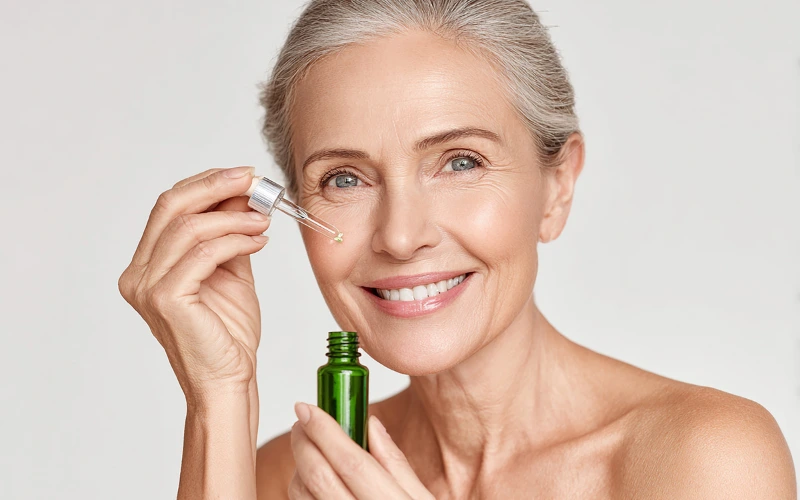
Retinol has become one of the best-known active ingredients in facial skincare. It is found in serums, night creams, eye contour products and formulas designed to improve the signs of skin ageing.
Its popularity is not simply the result of a trend. Retinol belongs to the retinoid family, a group of vitamin A derivatives whose effects on skin renewal, collagen production and pigmentation have been studied.
However, not all retinoids are the same. Retinol, retinaldehyde, retinyl esters and tretinoin have different levels of potency, stability and tolerability. In addition, the effectiveness of a cosmetic product does not depend solely on the concentration stated on the label. The formulation, packaging and method of use also make a difference.
In this article, we explain what retinol is, how it works, the main derivatives used in cosmetics and how to introduce these active ingredients into your routine safely.
What are retinoids?
Retinoids are natural or synthetic compounds related to vitamin A. This family includes active ingredients used in cosmetics and substances found in prescription medicines.
In the skin, retinoids influence processes such as:
- renewal of epidermal cells;
- collagen production and preservation;
- distribution of melanin, the pigment that gives skin its colour;
- follicle function and comedone formation;
- the thickness and organisation of the different layers of the skin.
Tretinoin, also known as retinoic acid, is the biologically active form. It acts directly on receptors in skin cells. By contrast, retinol and other cosmetic derivatives must undergo several transformations before becoming retinoic acid.
Tretinoin has a more powerful effect in the treatment of photoageing, but it also carries a higher risk of irritation. For this reason, it is a prescription medicine. Retinol, retinaldehyde and retinyl esters have a gentler action and are generally better tolerated by the skin.
Are retinol, retinaldehyde and tretinoin the same?
As previously explained, they are not chemically identical. They all belong to the same family, but they have different structures, conversion mechanisms and levels of potency.
The best-known metabolic pathway is:
Retinyl esters → retinol → retinaldehyde → retinoic acid
Each additional conversion step reduces the amount of retinoic acid that effectively reaches the cells. In general, the further a compound is from retinoic acid, the lower its potency tends to be. In return, the skin usually tolerates it better.
This comparison is only a general guide. Concentration, stability and the delivery system can significantly affect the performance of a product.
The main vitamin A derivatives
In summary, vitamin A derivatives differ in potency and tolerability. The main difference lies in the number of transformations required before they reach the active form, retinoic acid.
In general, compounds that are closer to the active form are more potent and may cause more irritation. The choice should take into account the skin’s needs, its level of sensitivity and previous experience with retinoids.
Retinoic acid or tretinoin
Tretinoin is the active form of the retinoid. It does not need to be converted within the skin before it can act.
It has proven effectiveness in the treatment of acne and photoageing. It may improve fine lines, pigmentation changes and certain aspects of skin texture.
However, it may also cause redness, burning, dryness and peeling. It should be used in accordance with medical advice and under the supervision of a healthcare professional.
Tretinoin is a medicine. It should not be confused with the retinol found in cosmetic products.
Retinal or retinaldehyde
Retinal, also known as retinaldehyde, requires only one conversion step before becoming retinoic acid.
For this reason, it tends to have a more direct effect than retinol. It may be an option for people who already tolerate cosmetic retinoids and are looking for a more active ingredient.
Tolerability depends on the concentration and formulation. Although retinal is often presented as a gentle alternative, it can also cause irritation, especially when first introduced.
Retinol
Retinol undergoes two conversion steps in the skin: it is first converted into retinal and then into retinoic acid.
It is one of the most widely used retinoids in cosmetics because it provides a good balance between effectiveness and skin tolerance. Regular use may help soften fine lines, improve texture, reduce the appearance of dark spots and create a more even appearance in skin showing signs of photoageing.
Because it is sensitive to light, heat and oxygen, the stability of retinol depends on the quality of the formulation and packaging. These factors influence how much of the substance remains active throughout the use of the product.
Retinyl esters
Retinyl esters include:
- retinyl palmitate;
- retinyl acetate;
- retinyl propionate.
These derivatives require more conversion steps before becoming retinoic acid. In general, they are less potent but offer greater stability and better tolerability.
They may be suitable for people with sensitive skin or those who have never used vitamin A derivatives. However, the clinical evidence regarding their effectiveness is less consistent than the evidence available for retinol or tretinoin.
Other cosmetic retinoids
The market also includes active ingredients such as retinyl retinoate, hydroxypinacolone retinoate and different encapsulation systems developed to improve the stability and tolerability of retinoids.
Although some of these compounds have produced interesting results, it is not yet possible to state that they are more effective than retinol or retinal. Terms such as “next-generation retinoid” or “non-irritating retinoid” should therefore be interpreted carefully, ideally with guidance from a healthcare professional.
The response to these substances varies from person to person. Any retinoid may cause dryness, redness or sensitivity, particularly at the beginning of use.
How does retinol work in the skin?
After being converted into retinoic acid, retinol binds to specific receptors in the cell nucleus. These receptors regulate the expression of genes related to skin renewal, differentiation and structure.
Although this process is complex, its main effects can be explained simply.
It stimulates collagen production
Collagen is an essential protein for the strength and firmness of the skin. Age and cumulative sun exposure reduce its production and accelerate its breakdown.
Retinoids may stimulate the synthesis of procollagen, the structure from which collagen is formed. They may also reduce the activity of certain matrix metalloproteinases, enzymes that break down components of the skin’s structure.
This action helps explain the gradual improvement in fine lines and certain changes caused by sun exposure, as ultraviolet radiation increases the activity of some of these enzymes.
It regulates cell renewal
Retinoids influence the multiplication and differentiation of keratinocytes, the most abundant cells in the epidermis.
This action may promote a more even skin surface and improve texture. It also helps prevent the accumulation of cells inside the follicles, a process involved in the formation of comedones in acne-prone or oily skin.
It improves the organisation of the epidermis
As the skin ages, the epidermis may become thinner and the connection between the epidermis and dermis may lose some of its organisation.
Retinoids help restore some of these characteristics. They may increase the thickness of the epidermis and improve the structure of the dermal–epidermal junction, the area connecting the two main layers of the skin.
It acts on pigmentation changes
Retinol does not act as an immediate depigmenting ingredient. Its effect on dark spots results from the regulation of cell renewal and mechanisms associated with the formation and distribution of melanin.
With regular use, it may help create a more even skin tone and reduce the intensity of some marks caused by sun exposure or previous inflammatory processes.
Remember: new or irregular marks, or marks that change in size, colour or shape, require medical assessment. A cosmetic product should not delay the examination of a suspicious lesion.
What are the benefits of retinol in cosmetics?
Retinol acts on several processes associated with photoageing. With regular use, it may improve skin texture, soften fine lines and contribute to a more even tone. Results appear gradually and vary according to the formulation, frequency of application and the skin’s response.
Reduced appearance of fine lines
Consistent use of retinol may soften fine lines and improve the appearance of certain wrinkles associated with photoageing.
This effect is related to the stimulation of collagen production and the reduction of the breakdown of the fibres that support the skin. The improvement becomes more noticeable with regular, long-term use.
Improved skin texture
Regulating cell renewal may help reduce roughness and create a smoother, more even skin surface.
The skin needs time to complete its adaptation and renewal processes. For this reason, texture usually improves over several weeks.
More even skin tone
Retinol may help reduce the intensity of certain dark spots and create a more even skin tone.
This effect results from its influence on cell renewal and the mechanisms involved in the formation and distribution of melanin. Daily sun protection helps maintain the results.
Support in managing blemishes
Retinoids regulate the shedding of cells inside the follicles. This action may help reduce the formation of blackheads and whiteheads.
However, retinol should not be used in cases of inflammatory acne or where there is a risk of scarring without an assessment by a healthcare professional, who can define the most appropriate care.
Is retinol as effective as tretinoin?
Tretinoin has a more direct action because it is already the active form of the retinoid. Retinol requires two conversion steps before becoming retinoic acid, which gives it a more gradual effect.
Tretinoin combines greater potency with a higher risk of irritation. Retinol generally provides a favourable balance between effectiveness and tolerability, particularly in long-term cosmetic routines.
The choice between these active ingredients should take into account the intended goal, skin sensitivity and the level of supervision required. It is important to remember that tretinoin is a prescription medicine, whereas retinol is used in cosmetic products.
How should you choose a cosmetic product containing retinol?
When choosing a cosmetic product containing retinol, consider your skin type, previous experience with retinoids and the objective of your routine. The concentration, formula stability and type of packaging influence the product’s performance. A gradual introduction helps improve tolerance and maintain consistent use.
Check which retinoid the product contains
The term “retinol complex” may include different derivatives. Check the ingredients list, also known as the INCI list, to identify the substances used.
Some names frequently found in cosmetics and medicines include:
- Retinol;
- Retinal;
- Retinaldehyde;
- Retinyl Palmitate;
- Retinyl Acetate;
- Retinyl Propionate.
Bakuchiol, botanical extracts and so-called “bio-retinoids” are not vitamin A derivatives. They may have interesting properties, but they should not be considered equivalent to retinol.
Do not assess a product based on percentage alone
A product with a higher percentage is not necessarily more effective.
The result also depends on:
- the stability of the active substance;
- the encapsulation system;
- penetration capacity;
- the type of vehicle;
- the presence of moisturising ingredients;
- the packaging;
- frequency of application;
- individual tolerance.
In addition, some brands state the percentage of the entire complex rather than the amount of pure retinol. This difference may make it difficult to compare products.
Choose packaging that protects the formula
Retinol breaks down easily when exposed to light, heat and oxygen.
Choose opaque, tightly sealed packaging that limits air exposure. Airless containers may help reduce the product’s contact with the surrounding environment.
Store the cosmetic product according to the manufacturer’s instructions. Avoid leaving it near sources of heat or in direct sunlight.
Choose a formula suited to your skin
Dry or sensitive skin may benefit from cream formulas containing ceramides, glycerine, hyaluronic acid or other moisturising ingredients.
Serum or gel textures may be better suited to combination or oily skin. However, the texture alone does not determine the risk of irritation.
Are there limits on retinol in European cosmetic products?
The European Union has established maximum limits for the use of retinol, retinyl acetate and retinyl palmitate in cosmetic products:
- 0.05% retinol equivalent in body lotions;
- 0.3% retinol equivalent in other products, whether rinse-off or leave-on.
Retinol equivalent allows the amount of vitamin A provided by different derivatives to be expressed and compared. For this reason, this value may not directly correspond to the total percentage of the substance stated in the formulation.
Since 1 November 2025, cosmetic products placed on the European Union market for the first time must comply with these limits. Earlier products that do not comply may remain available only until 1 May 2027. The packaging must also include a warning stating that these active ingredients contribute to the daily intake of vitamin A.
How should you introduce retinol into your routine?
A gradual introduction supports skin adaptation and helps prevent irritation. The frequency of application should follow individual tolerance. During this phase, keep your routine simple, reinforce hydration and use sun protection every day.
Begin with only a few applications
Start by applying the product once or twice a week at night. Maintain this frequency for two to four weeks.
If your skin tolerates the product well, increase the frequency to every other night. Daily application is not essential to obtain benefits.
Sensitive skin may require a longer adaptation period.
Apply it to clean, dry skin
After cleansing, dry your face without rubbing. Wait a few minutes before applying retinol, especially if your skin is prone to irritation.
Damp skin may encourage faster penetration and increase discomfort in some people.
Use a small amount
An amount approximately the size of a pea is usually sufficient for the entire face.
A thicker layer will not speed up the results. It will only increase the risk of dryness, burning and peeling.
Avoid the sides of the nose, the corners of the mouth and the eyelids unless the product specifically states that it can be used in these areas.
Reinforce hydration
Apply a moisturiser after the retinol. For very sensitive skin, you can use the layering or “sandwich” method:
- Apply a thin layer of moisturiser.
- Apply the retinol.
- Finish with a second layer of moisturiser.
This technique may reduce irritation, although it may also slightly decrease the penetration of the retinoid.
Use sun protection every day
Ultraviolet radiation is one of the main causes of photoageing. Without sun protection, it becomes difficult to preserve the results of any anti-ageing routine.
Retinol should not replace sunscreen. Use a broad-spectrum sunscreen with an appropriate sun protection factor every day and reapply it when necessary.
Retinoids may also cause dryness and irritation, temporarily reducing the skin’s ability to tolerate sun exposure. In addition, several forms of vitamin A degrade when exposed to light. For these reasons, evening application is usually recommended.
Simplify the rest of your routine
During the first few weeks, avoid applying several potentially irritating active ingredients on the same night, including:
- glycolic, lactic or salicylic acid;
- physical exfoliants;
- strong formulas containing benzoyl peroxide;
- products with a high alcohol content;
- other retinoids.
A routine containing several active ingredients simply requires more caution and gradual adaptation.
For example, you can use vitamin C in the morning and retinol at night. You can also alternate retinol nights with chemical exfoliation nights.
What is retinisation?
Retinisation is the initial period during which the skin adapts to retinoids.
During the first few weeks, the following may occur:
- dryness;
- a feeling of tightness;
- mild peeling;
- redness;
- mild burning;
- increased sensitivity to other cosmetic products.
These signs should remain mild and improve when the frequency of application is reduced, hydration is increased or the product is paused briefly.
Pain, intense burning, swelling, cracks, crusting or persistent redness are not signs of normal adaptation. Stop using the product and seek professional advice.
Who should take special precautions with retinol?
Some people are more sensitive to retinoids and may benefit from using them under the guidance of a healthcare professional.
Pregnancy or planning a pregnancy
Oral retinoids carry a known risk of foetal malformations. The absorption of topical retinoids is much lower, but European authorities recommend that they should not be used during pregnancy or by women planning to become pregnant, as a precaution.
This recommendation should also be taken into account when considering cosmetics containing retinol, retinal or retinyl esters.
Accidental exposure to a cosmetic product does not necessarily mean that harm has occurred. In this situation, stop using the product and speak to the doctor monitoring the pregnancy.
Breastfeeding
Information about the use of cosmetic retinoids during breastfeeding is limited.
Ask your doctor or pharmacist for advice before starting the product. Avoid applying retinoids to the breast or to areas that may come into direct contact with the baby’s skin or mouth.
Skin with rosacea, eczema or a weakened barrier
People with rosacea, eczema, dermatitis or very reactive skin may have a higher risk of irritation.
Begin with a gentle formula and a low frequency of application. During an inflammatory flare-up, it may be necessary to postpone introducing retinol.
Use of acne medicines
People using tretinoin, adapalene, tazarotene, oral isotretinoin or other acne treatments should not add a cosmetic retinol product without professional advice.
Combining these products may increase dryness and irritation without providing a relevant additional benefit.
How long does retinol take to work?
The time required to see results varies according to the formulation, frequency of application, condition of the skin and intended goal.
Some people may notice a smoother, more even texture after four to eight weeks. Improvements in fine lines, dark spots and firmness tend to appear more gradually, usually after three to six months of consistent use.
Skin renewal and collagen production are slow processes. For this reason, consistency and good tolerance are generally more important than using high concentrations.
Retinol in summer: do you need to stop using it?
It is not necessary to stop using retinol during the summer.
However, you may need to reduce the frequency if there is:
- intense sun exposure;
- a holiday involving many outdoor activities;
- irritation or sunburn;
- difficulty maintaining adequate sun protection;
- frequent contact with salt water or chlorine;
- cosmetic or aesthetic treatments.
Do not apply retinol to sunburnt skin. Resume use only after the skin barrier has recovered.
In conclusion, retinol and its derivatives are among the most extensively studied cosmetic active ingredients for photoageing. They may help improve fine lines, uneven texture and changes in skin tone.
Tretinoin continues to offer greater potency and stronger clinical evidence, but it belongs to the group of prescription medicines. In cosmetic products, retinol provides a favourable balance between activity and tolerability. Retinaldehyde may provide a more direct action, while retinyl esters are gentler options.
Concentration should not be the only selection criterion. Formula stability, packaging, skin tolerance and consistent use also influence the results.
Begin gradually, reinforce hydration and use sun protection every day. In cases of pregnancy, plans to become pregnant, skin conditions or the use of dermatological treatments, seek professional advice before starting a retinoid.
The Farmácia Dias Machado team can help you choose a formula suited to the characteristics and needs of your skin.
Retinol can promote the renewal of the outermost layer, but it can also increase the thickness of the living layers of the epidermis and stimulate structural components of the dermis.
A sensação de pele fina costuma resultar de secura ou irritação excessiva.
Some people tolerate daily application. Others achieve good results with two to four applications per week.
The best frequency is the one that allows for continued use without persistent inflammation.
Higher concentrations increase the risk of irritation and do not always provide additional benefits.
Stability, the vehicle, and consistency of use also influence the results.
In metabolic terms, retinaldehyde is closer to retinoic acid and requires only a single conversion step. For this reason, it may exhibit greater activity.
However, it is not possible to compare two products based solely on the ingredient name. Concentration and formulation also matter.
Retinyl palmitate offers greater stability and is generally well-tolerated. However, it requires several conversion steps, and clinical evidence is less consistent.
It can be a suitable starting option for sensitive skin, though the effects tend to be more subtle.
You can use a product formulated and tested for this area. The skin around the eyes is thin and sensitive.
Avoid getting the product too close to the lash line and do not apply it to irritated eyelids. Start by using it just a few times a week.
Yes. Hyaluronic acid helps retain water and can complement a retinol routine.
Combining them does not eliminate the risk of irritation, but it can improve skin comfort.
There is no inherent incompatibility. However, both active ingredients can cause discomfort for sensitive skin, depending on the formula.
A simple option is to use vitamin C in the morning and retinol at night.
Some people experience a temporary increase in blemishes, especially if they are already prone to comedones.
However, breakouts accompanied by burning, itching, or red patches may indicate irritation or a reaction to another ingredient in the formula.
A persistent reaction should not automatically be interpreted as a normal adjustment phase.
In most cases, it is not necessary. Store the product in a cool, dry place away from light.
Always follow the instructions on the packaging. Changes in color, odor, or texture may indicate degradation.
Referências Bibliográficas
Balado-Simó, P., Morgado-Carrasco, D., Gómez-Armayones, S., López-Ferrer, A., Barco, D., Ferrándiz-Pulido, C., & Podlipnik, S. (2025). An updated review of topical tretinoin in dermatology: From acne and photoaging to skin cancer. Journal of Clinical Medicine, 14(22), 7958. https://doi.org/10.3390/jcm14227958.
Chien, A. L., Kim, D. J., Cheng, N., Shin, J., Leung, S. G., Nelson, A. M., Zang, J., Suh, H., Rainer, B., Wallis, L., Okoye, G. A., Loss, M., & Kang, S. (2022). Biomarkers of tretinoin precursors and tretinoin efficacy in patients with moderate to severe facial photodamage: A randomized clinical trial. JAMA Dermatology, 158(8), 879–886. https://doi.org/10.1001/jamadermatol.2022.1891.
European Commission. (2024). Commission Regulation (EU) 2024/996 of 3 April 2024 amending Regulation (EC) No 1223/2009 as regards the use of vitamin A, alpha-arbutin, arbutin and certain substances with potential endocrine-disrupting properties in cosmetic products. Official Journal of the European Union. Consult Commission Regulation (EU) 2024/996 on EUR-Lex.
European Medicines Agency. (2018). Updated measures for pregnancy prevention during retinoid use. Consult the European Medicines Agency publication.
Farris, P. (2022). Retinol: The ideal retinoid for cosmetic solutions. Journal of Drugs in Dermatology, 21(7 Suppl.), S4–S10. Consult the article. https://doi.org/10.36849/JDD.SO722.
Farris, P. K., Berson, D., Bhatia, N., Goldberg, D., Lain, E., Mariwalla, K., Zeichner, J. A., Miller, D., McGuire, T., & Kizoulis, M. G. (2024). Efficacy and tolerability of topical 0.1% stabilized bioactive retinol for photoaging: A vehicle-controlled integrated analysis. Journal of Drugs in Dermatology, 23(4), 209–215. https://doi.org/10.36849/JDD.8124.
Mambwe, B., Mellody, K. T., Kiss, O., O’Connor, C., Bell, M., Watson, R. E. B., & Langton, A. K. (2025). Cosmetic retinoid use in photoaged skin: A review of the compounds, their use and mechanisms of action. International Journal of Cosmetic Science, 47(1), 45–57. https://doi.org/10.1111/ics.13013.
Milosheska, D., & Roškar, R. (2022). Use of retinoids in topical antiaging treatments: A focused review of clinical evidence for conventional and nanoformulations. Advances in Therapy, 39(12), 5351–5375. https://doi.org/10.1007/s12325-022-02319-7.
Zasada, M., Budzisz, E., & Erkiert-Polguj, A. (2020). A clinical anti-ageing comparative study of 0.3 and 0.5% retinol serums: A clinically controlled trial. Skin Pharmacology and Physiology, 33(2), 102–116. https://doi.org/10.1159/000508168.
Tags:
